


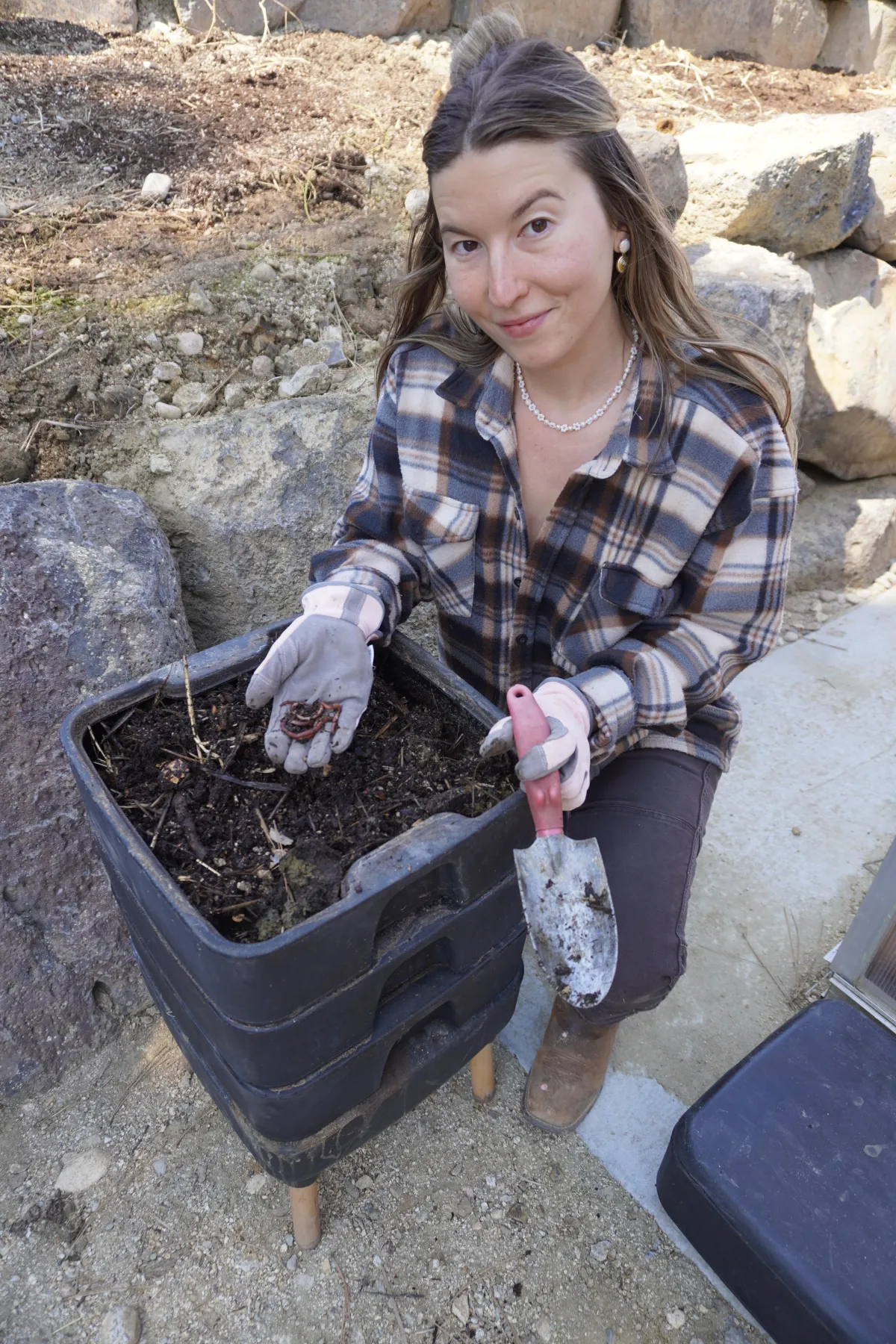
Hey, I'm Annie
I'm not here to sell you a fantasy version of homestead life.
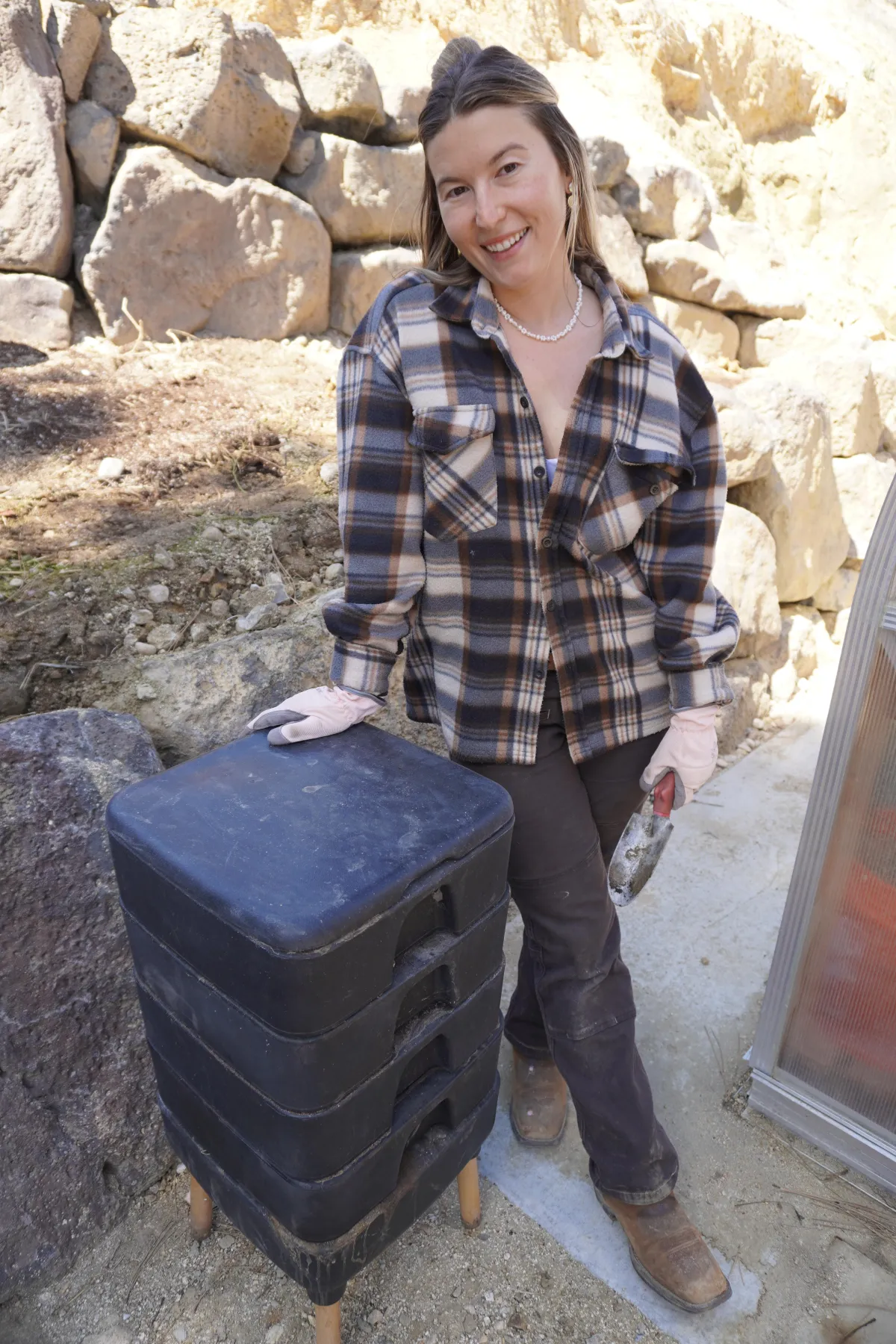
I'm living the real thing — off the grid, in the Idaho mountains, with a flock I hatched myself, a grow room, a greenhouse, and a very strong opinion about what's in your food.
If you found me through the chemtrail content — welcome.
If you found me through the chicken content — also welcome.
They're the same page. Stick around and you'll see why.

Midwest girlie
I grew up in South Dakota. Real food came from someone you knew. Slow living wasn't a trend — it was just Tuesday.
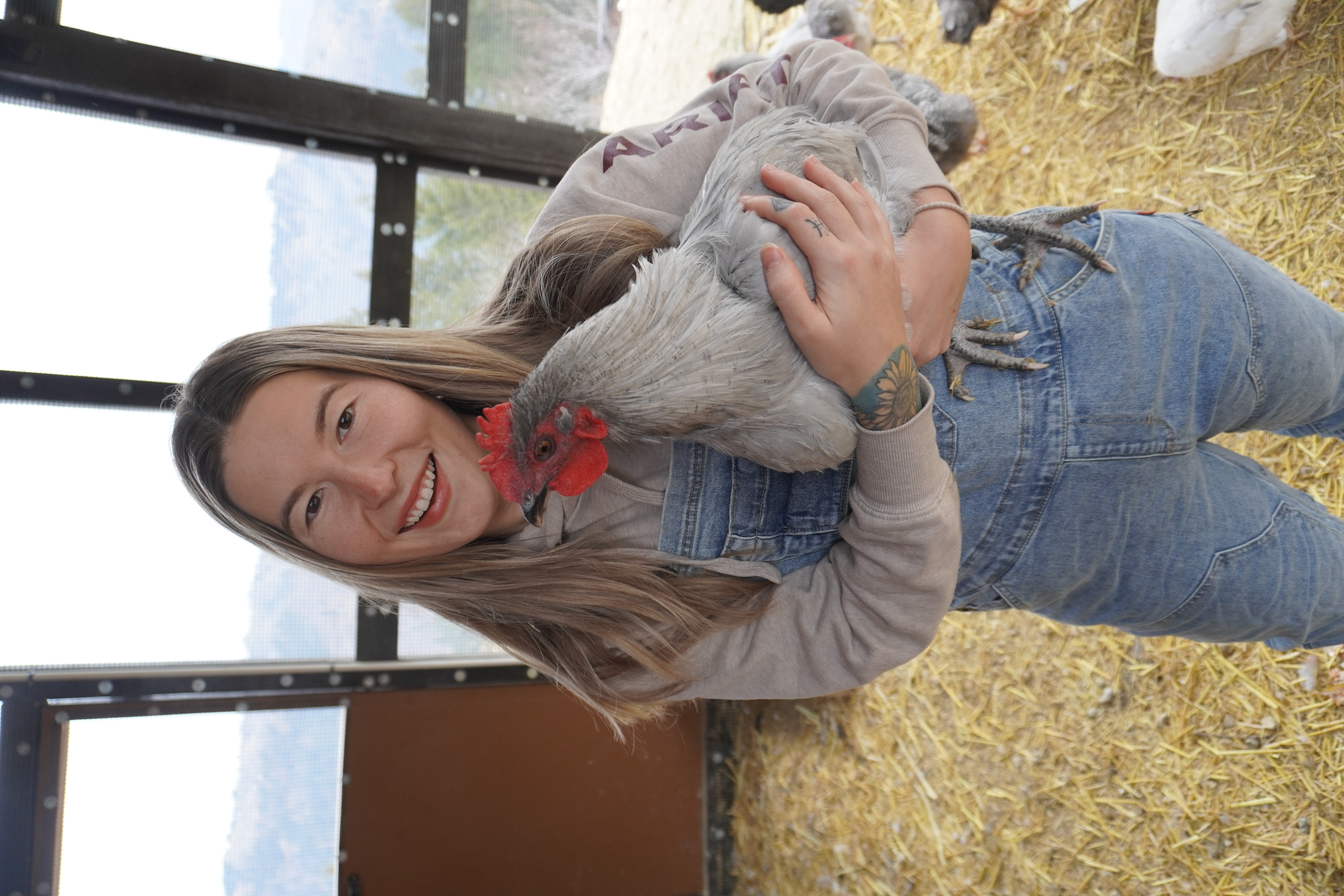
These days I live tucked into the Idaho mountains, off-grid by design. I have a flock of birds I hatched from eggs I collected from birds I raised. I have an indoor grow room and a greenhouse. I source feed with no soy, no corn, no seed oils. My birds free-range on actual Idaho ground every single day.
I didn't move here for the aesthetic. I moved here because the further I got from the supply chain, the better I felt about what I was putting in my body.

Green Thumb Guru
I grow what I eat because I don't trust what I can't trace.
I hatch my own flock because I want to know every part of the chain — what the parent birds ate, what the ground looked like, what went into the egg that went into my breakfast.
I source feed I can read the label on and actually understand. I grow mealworms for my birds because I'd rather know the protein source than trust a bag that says "natural ingredients."
This isn't a hobby. It's the most deliberate thing I do.

Community Builder
I'm not interested in chasing followers.
I'm interested in building a community of people who are asking the same questions I'm asking and doing something about it.
People who are done outsourcing their food supply to a system they don't fully trust.
People who are curious enough to look into it and stubborn enough to do something about it.
If that's you — you found the right page.
Why Trust ME
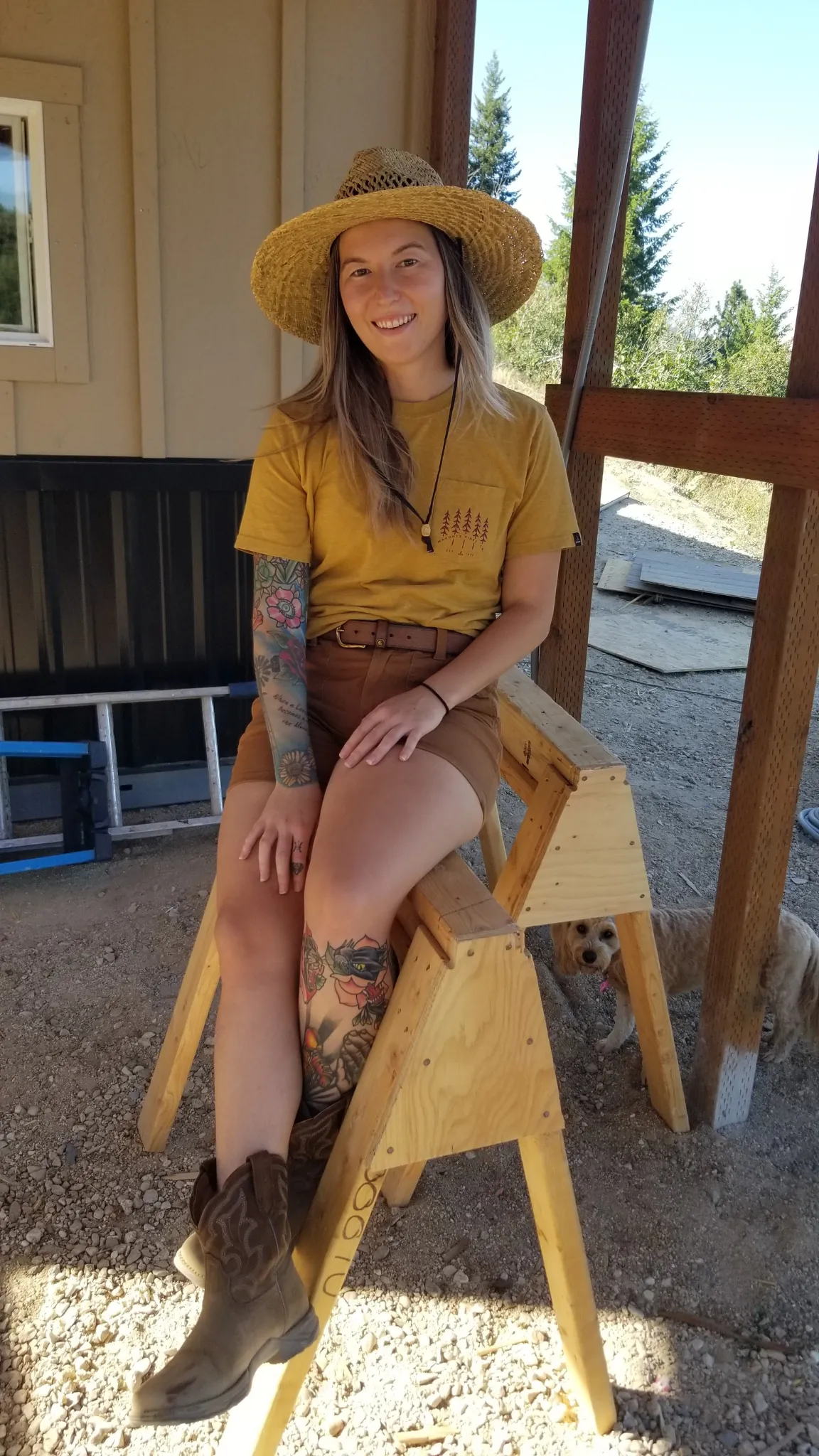
Because I'm not here to sell you a fantasy — I'm living the real thing.
I didn't grow up doing this. I learned the hard way: one frozen waterer, failed hatch, and rogue rooster at a time.
I built my homestead from scratch. Off-grid. In the mountains. With no blueprint and a lot of trial and error.
Here's what I know now that I didn't know then:
The information is out there. But most of it is either dressed up past the point of being useful, or so overwhelming it makes you want to give up before you start.
I share everything — what worked, what failed, what I'd do differently. From mealworms to meat birds. Soil to coop automation. Incubation humidity to lockdown day 18.
I'm not a guru. I'm someone who got fed up with the system, decided to build a way out of it, and documented everything along the way so you don't have to figure it all out alone.
Growing your own food is the most radical act of self-preservation we have left. I take that seriously, and you should too.
So if you want someone who gets it — someone who's walked through the overwhelm and is still walking, still building, still learning — You're in the right place.
Why choose my course
Because Googling every chicken question at midnight isn’t a strategy.
My "Hatch to Harvest" course is the guide I wish I had when I started. Googling your way through a hatch at midnight isn't a system. It's a prayer.
I built Hatch to Harvest because when I started, I couldn't find a single resource that covered the full process — from picking the right egg to harvest day — without either dumbing it down or leaving out the parts that matter.
This is the course I built for myself and made available because you deserve more than a patchwork of YouTube videos and Facebook group opinions.
Everything from brooder setup to harvest. Every step in order. Hard-earned from doing it myself, off-grid, without a team.
It's not for people who want to dabble. It's for people who are ready to raise their own meat, know exactly what they're eating, and stop depending on a supply chain they can't see.
What problems can I solve
If you've ever felt any of this — keep reading...
Overwhelmed by conflicting advice and not sure who to actually trust.
Frustrated by courses that cost a lot and assume you already know things.
Ready to raise your own food but not sure where the first step is.
Done trusting labels and wanting to know the full chain from seed, egg, or chick to what's on your plate.
Suspicious that the food system isn't as stable as everyone says — and wanting to build something that doesn't depend on it.
I've been all of those things.
I'll walk you through every part of this — chickens, food, systems, sourcing — with clear practical steps from someone who's done it the hard way and figured out what actually works.
This isn't about being perfect. It's about being less dependent. One bird, one harvest, one skill at a time.
Read The Blog
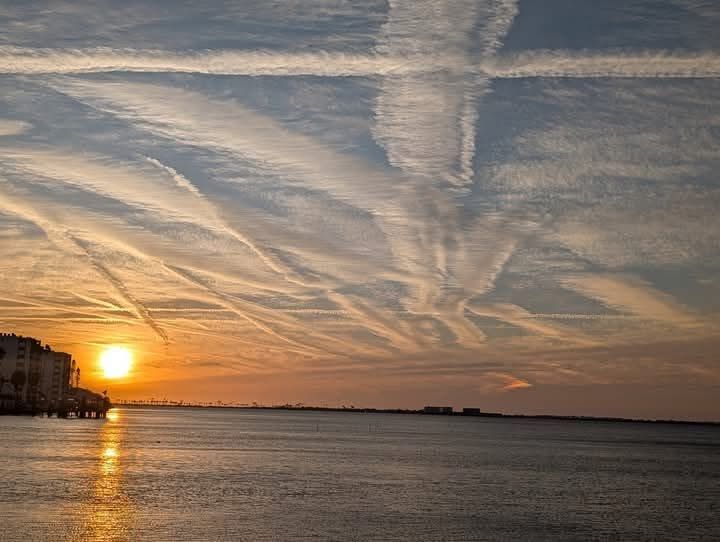
The Real "Artificial Suns": Inside the Race to Build a Star on Earth
The Real "Artificial Suns": Inside the Race to Build a Star on Earth
Here's something most people don't know exists: governments around the world are already building "artificial suns." That's not a theory — it's the actual, official nickname for a real category of technology, and it's been in mainstream headlines for years.
Just not the kind of artificial sun most people assume when they hear the phrase.
What an "Artificial Sun" Actually Is
An artificial sun, in the real, documented sense, refers to experimental nuclear fusion reactors designed to replicate the energy-generation process that powers stars. By fusing hydrogen atoms at temperatures exceeding 100 million degrees Celsius — hotter than the core of the actual sun — these facilities aim to produce a limitless, clean energy source with zero carbon footprint and no long-lived radioactive waste.
Since no physical material can survive direct contact with plasma that hot, scientists use massive devices called tokamaks or stellarators to contain it, suspending the superheated plasma inside powerful magnetic fields so it never touches the reactor walls.
The Real Projects Behind the Name
EAST (Experimental Advanced Superconducting Tokamak) — Located in Hefei, China, EAST set a record by sustaining high-confinement plasma for 1,066 seconds. This is the reactor most often nicknamed "China's artificial sun" in international press.
ITER (International Thermonuclear Experimental Reactor) — Under construction in France, ITER is the largest magnetic confinement fusion experiment ever built, backed by a consortium including the U.S., EU, China, and Russia.
National Ignition Facility (NIF) — At Lawrence Livermore National Laboratory in California, NIF uses high-powered lasers instead of magnetic confinement, and made global headlines for achieving net energy gain from a fusion reaction.
The Patents Behind the Technology
"Artificial sun" patents generally fall into two real, distinct categories:
Solar simulators — high-intensity indoor lighting systems built to replicate the sun's spectrum, including UV and infrared, for testing solar panels, spacecraft materials, and human-centric therapeutic lighting. These include historic NASA-era patents and newer therapeutic lighting inventions like US Patent 11,129,250.
Nuclear fusion reactors — the tokamaks themselves, with patents covering vacuum chambers, superconducting magnets, and plasma control systems. Countries leading the fusion race, particularly China, have filed hundreds of patents in this category alone.
Why This Matters Alongside Everything Else
I'm not folding this into the weather modification story, and I want to be direct about why: those are two completely different things wearing a similar name. Fusion reactors are Earth-bound energy machines sitting inside research facilities — they have nothing to do with what's happening in the sky above your house. Conflating them would actually weaken both stories by making it look like real fusion news is "proof" of something it doesn't touch.
What this does prove is simpler, and honestly more interesting: humanity is actively racing to build literal stars on Earth, using real, patented, government-funded technology, and most people have no idea it's happening. You don't need a conspiracy theory for that to be remarkable. It just is.
What This Means for Homesteaders
A tokamak isn't something you'll ever run off your own land — this is mega-scale, international, multi-billion-dollar science. But the underlying instinct behind it, energy independence, isn't so different from what we're doing on a much smaller scale out here.
Whether it's a nation trying to stop depending on fossil fuels, or a homestead trying to stop depending on the grid, the question underneath is the same one: who controls the power, and what happens if that control fails? That's worth sitting with, on any scale.
Annie's Homestead is not affiliated by Facebook™ in any way. Facebook™ is a registered trademark of Facebook™ Inc
Branding and Website by RoyalT Studio