



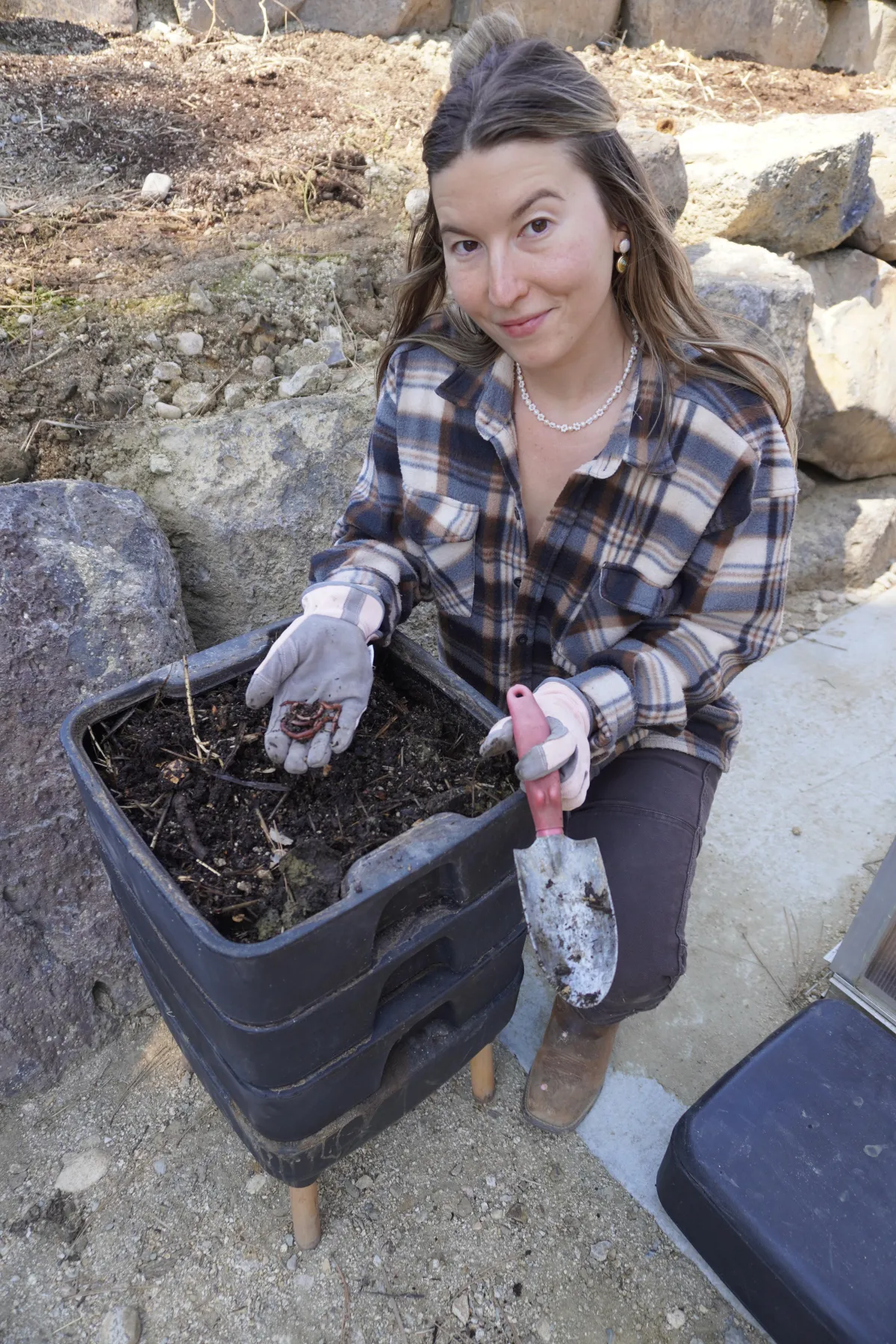
Hey, I'm Annie
I'm not here to sell you a fantasy version of homestead life.
I'm living the real thing — off the grid, in the Idaho mountains, with a flock I hatched myself, a grow room, a greenhouse, and a very strong opinion about what's in your food.
If you found me through the chemtrail content — welcome.
If you found me through the chicken content — also welcome.
They're the same page. Stick around and you'll see why.

Midwest girlie
I grew up in South Dakota. Real food came from someone you knew. Slow living wasn't a trend — it was just Tuesday.
These days I live tucked into the Idaho mountains, off-grid by design. I have a flock of birds I hatched from eggs I collected from birds I raised. I have an indoor grow room and a greenhouse. I source feed with no soy, no corn, no seed oils. My birds free-range on actual Idaho ground every single day.
I didn't move here for the aesthetic. I moved here because the further I got from the supply chain, the better I felt about what I was putting in my body.

Green Thumb Guru
I grow what I eat because I don't trust what I can't trace.
I hatch my own flock because I want to know every part of the chain — what the parent birds ate, what the ground looked like, what went into the egg that went into my breakfast.
I source feed I can read the label on and actually understand. I grow mealworms for my birds because I'd rather know the protein source than trust a bag that says "natural ingredients."
This isn't a hobby. It's the most deliberate thing I do.

Community Builder
I'm not interested in chasing followers.
I'm interested in building a community of people who are asking the same questions I'm asking and doing something about it.
People who are done outsourcing their food supply to a system they don't fully trust.
People who are curious enough to look into it and stubborn enough to do something about it.
If that's you — you found the right page.
Why Trust ME
Because I'm not here to sell you a fantasy — I'm living the real thing.
I didn't grow up doing this. I learned the hard way: one frozen waterer, failed hatch, and rogue rooster at a time.
I built my homestead from scratch. Off-grid. In the mountains. With no blueprint and a lot of trial and error.
Here's what I know now that I didn't know then:
The information is out there. But most of it is either dressed up past the point of being useful, or so overwhelming it makes you want to give up before you start.
I share everything — what worked, what failed, what I'd do differently. From mealworms to meat birds. Soil to coop automation. Incubation humidity to lockdown day 18.
I'm not a guru. I'm someone who got fed up with the system, decided to build a way out of it, and documented everything along the way so you don't have to figure it all out alone.
Growing your own food is the most radical act of self-preservation we have left. I take that seriously, and you should too.
So if you want someone who gets it — someone who's walked through the overwhelm and is still walking, still building, still learning — You're in the right place.
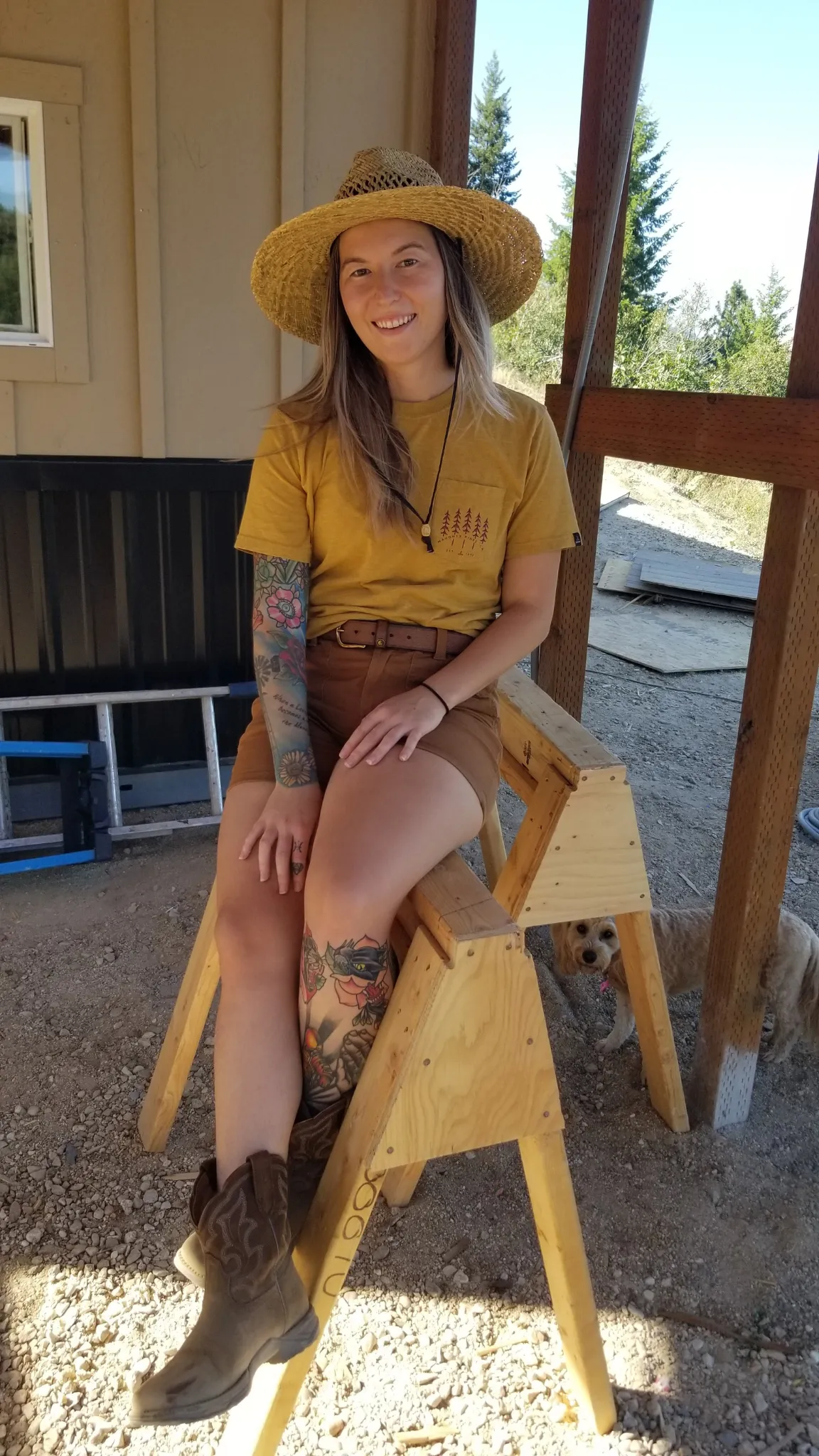
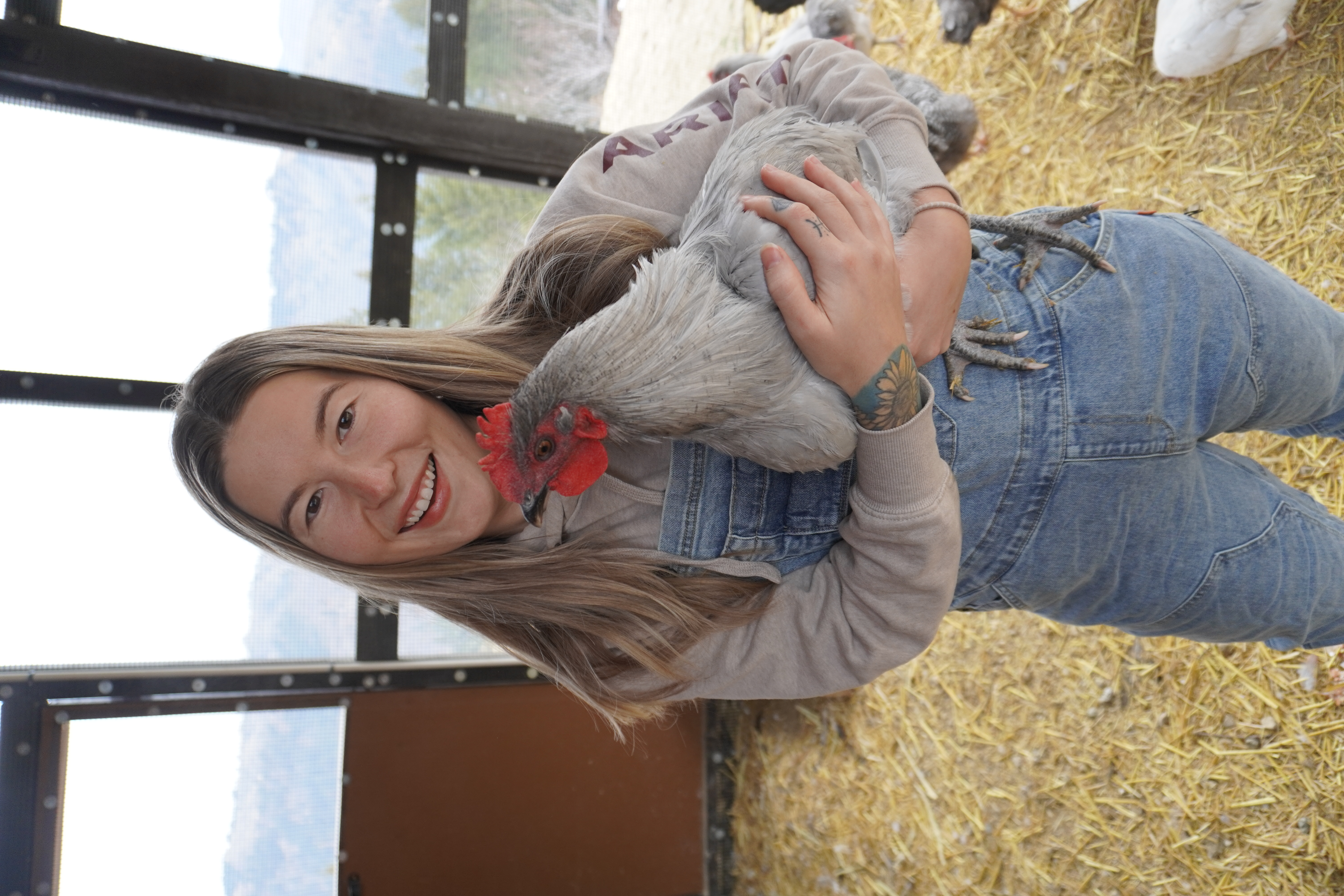
Why choose my course
Because Googling every chicken question at midnight isn’t a strategy.
My "Hatch to Harvest" course is the guide I wish I had when I started. Googling your way through a hatch at midnight isn't a system. It's a prayer.
I built Hatch to Harvest because when I started, I couldn't find a single resource that covered the full process — from picking the right egg to harvest day — without either dumbing it down or leaving out the parts that matter.
This is the course I built for myself and made available because you deserve more than a patchwork of YouTube videos and Facebook group opinions.
Everything from brooder setup to harvest. Every step in order. Hard-earned from doing it myself, off-grid, without a team.
It's not for people who want to dabble. It's for people who are ready to raise their own meat, know exactly what they're eating, and stop depending on a supply chain they can't see.
What problems can I solve
If you've ever felt any of this — keep reading...
Overwhelmed by conflicting advice and not sure who to actually trust.
Frustrated by courses that cost a lot and assume you already know things.
Ready to raise your own food but not sure where the first step is.
Done trusting labels and wanting to know the full chain from seed, egg, or chick to what's on your plate.
Suspicious that the food system isn't as stable as everyone says — and wanting to build something that doesn't depend on it.
I've been all of those things.
I'll walk you through every part of this — chickens, food, systems, sourcing — with clear practical steps from someone who's done it the hard way and figured out what actually works.
This isn't about being perfect. It's about being less dependent. One bird, one harvest, one skill at a time.
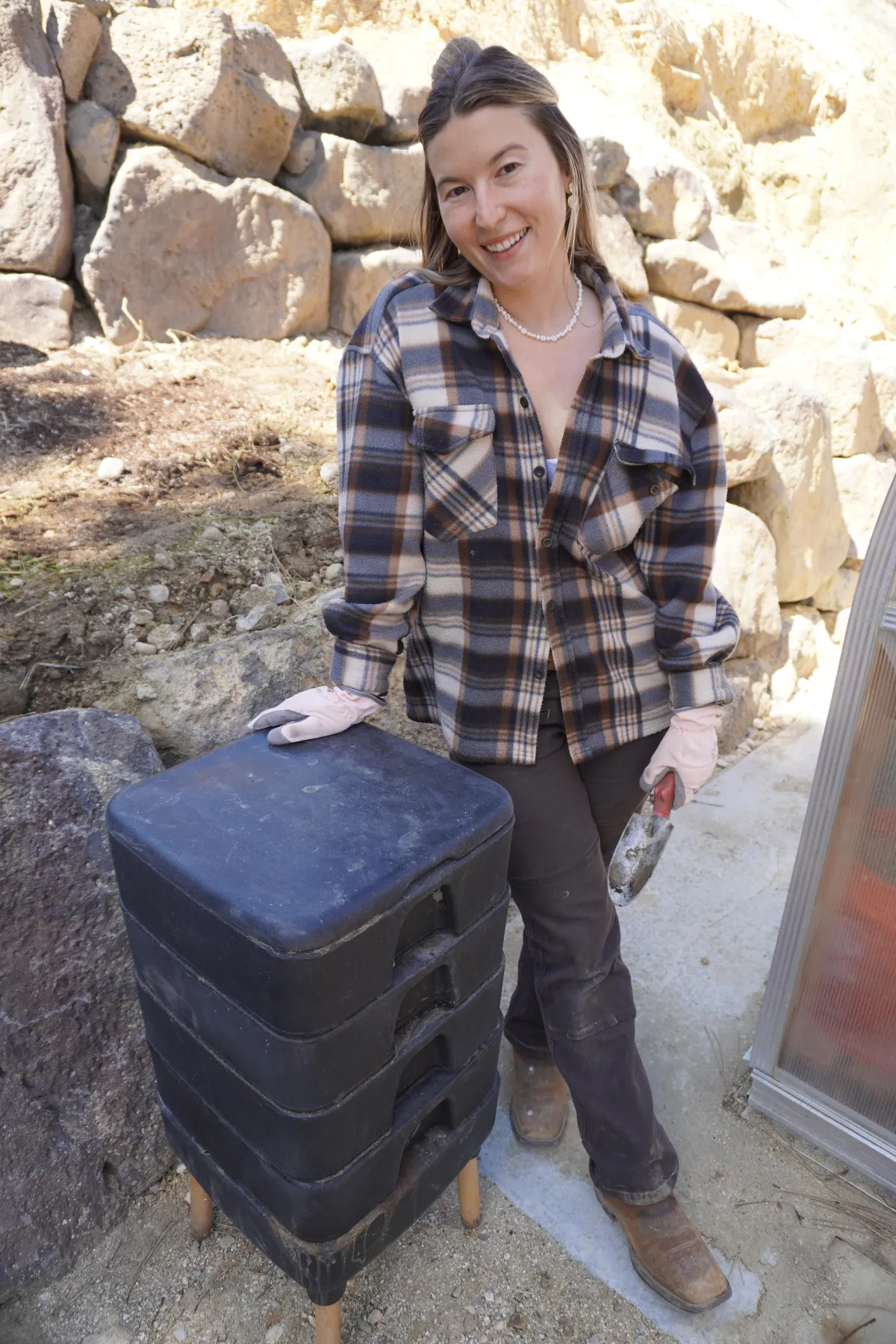
Read The Blog
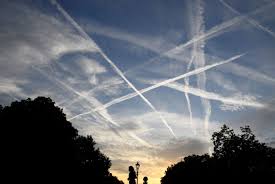
They've Been Trying to Control the Weather Since 1891
They've Been Trying to Control the Weather Since 1891
Most people hear the word "geoengineering" and immediately write it off. It sounds futuristic. Conspiracy-coded. Unreal. Our government would never do something so evil, right?
But what if the real story isn't about the future?
What if it's about the past?
Because here's something most people don't know: humans have been trying to influence the weather for well over a century. Not in theory. Not in secret. In the public patent record.
And once you see the timeline, you can't unsee it.
It starts earlier than you'd think
In 1891 — the same decade people were still traveling by horse and buggy — an inventor filed a patent with the United States Patent and Trademark Office titled "Method of Producing Rain-Fall."
That was 1891. (!!!)
By 1913 there was a patent called "Rain-Maker." By 1919, inventors were patenting processes for causing precipitation by manipulating aqueous particles in the atmosphere. By 1927, there were patents for producing smoke clouds from moving aircraft.
This wasn't fringe science. This was documented, filed, and publicly recorded experimentation.
A century of patents — in three eras
Early era · 1890s–1940s
Rainmaking, fog, and smoke. Early patents focused on producing rain, dispersing fog, and generating smoke screens. By 1915, there were even patents for protecting against poisonous gas in warfare. The atmosphere was already being seen as something that could be manipulated.
Mid-century · 1950s–1970s
Cloud seeding goes mainstream. This is where the volume explodes. Patents for cloud seeding, fog dispersal, weather modification, and atmospheric particle control multiply rapidly. Cold War interest in environmental control accelerates the research. By 1962, there were patents for "artificially influencing the weather." By 1971, for "weather modification method."
Modern era · 1980s–present
Scale and sophistication. Patents shift toward satellite-based concepts, aerosol technologies, ionosphere manipulation, and climate intervention. In 1987, a now-famous patent — often called the HAARP patent — described a method for "altering a region in the earth's atmosphere, ionosphere, and/or magnetosphere." In 1991, there was a patent for "stratospheric Welsbach seeding for reduction of global warming." By 2023, there are systems for programmable climate control panels and electromagnetic weather modification.
In total, the compiled patent record runs from 1891 all the way to 2023. Hundreds of patents. Publicly filed. Publicly searchable.
This isn't theory. It's documented experimentation — across six generations.
At what point does capability become the question?
There's an important distinction worth making here, and I want to be honest about it:
There's a difference between documented weather modification — like cloud seeding, which is openly used today to increase rainfall in drought-stricken areas — and large-scale, coordinated climate control that's harder to verify or track.
I'm not here to tell you which claims are true and which aren't. That's not the point of this post.
The point is this: when we spend over 130 years trying to influence the atmosphere, the question shifts. It's no longer "Is this possible?"
The question becomes: how far has it gone?
And that's a question worth sitting with — regardless of where you land politically, scientifically, or spiritually.
Why this matters on the homestead
For those of us growing food, raising animals, and trying to live closer to natural systems, this history feels personal in a way it might not for everyone.
We pay attention to weather differently. We notice patterns. We watch the sky, track the seasons, and feel it in the garden when something is off.
I'm not saying that awareness makes you paranoid. I think it makes you awake.
And honestly? This is one of the reasons so many people are coming back to:
Growing their own food
Building resilience into their homes and land
Paying attention to their local environment
Asking questions instead of outsourcing answers
Not out of fear. Out of awareness.
Most people are still arguing about whether weather modification is real.
Without ever looking at the timeline.
Over a century of patents.
Decades of experimentation.
And a question that still doesn't have a clean answer:
What are we actually capable of now?
I don't have all the answers. I don't think anyone does. But I'd rather ask the question out loud — from the homestead, with my hands in the soil — than pretend the history doesn't exist.
Do your own research. Look up the patent record. Form your own opinion.
That's all I'm asking.

Annie's Homestead is not affiliated by Facebook™ in any way. Facebook™ is a registered trademark of Facebook™ Inc
Branding and Website by RoyalT Studio