



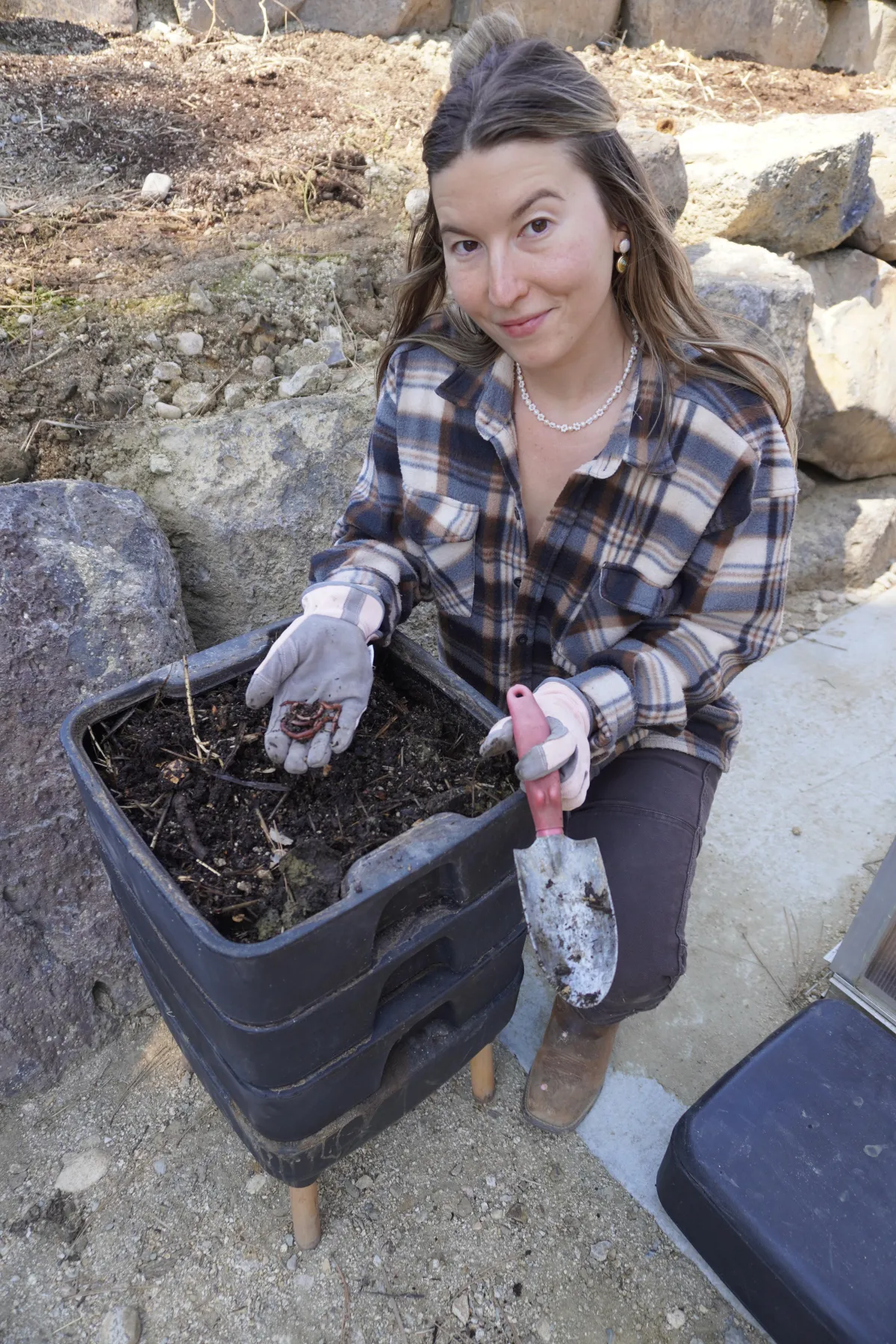
Hey, I'm Annie
I'm not here to sell you a fantasy version of homestead life.
I'm living the real thing — off the grid, in the Idaho mountains, with a flock I hatched myself, a grow room, a greenhouse, and a very strong opinion about what's in your food.
If you found me through the chemtrail content — welcome.
If you found me through the chicken content — also welcome.
They're the same page. Stick around and you'll see why.

Midwest girlie
I grew up in South Dakota. Real food came from someone you knew. Slow living wasn't a trend — it was just Tuesday.
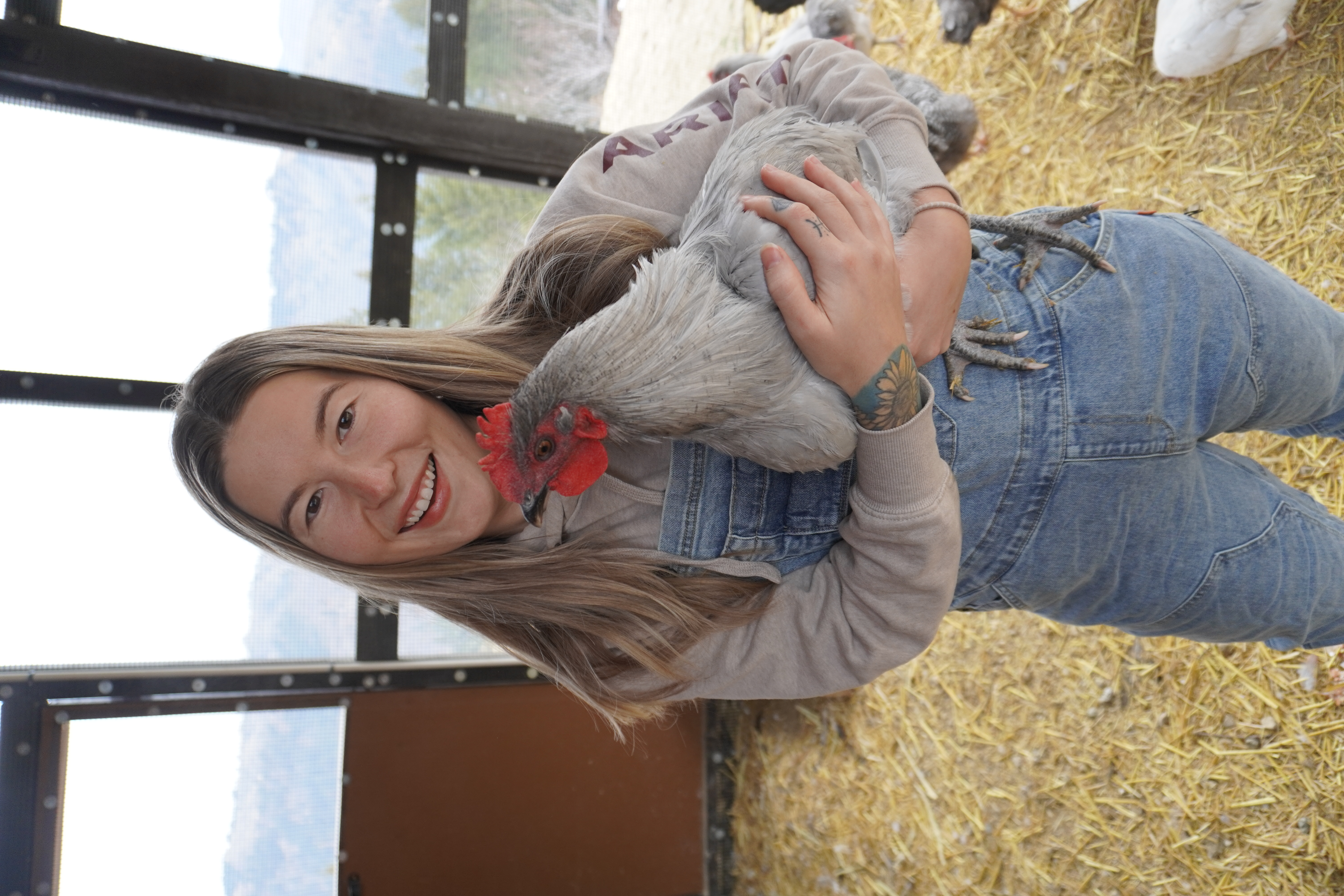
These days I live tucked into the Idaho mountains, off-grid by design. I have a flock of birds I hatched from eggs I collected from birds I raised. I have an indoor grow room and a greenhouse. I source feed with no soy, no corn, no seed oils. My birds free-range on actual Idaho ground every single day.
I didn't move here for the aesthetic. I moved here because the further I got from the supply chain, the better I felt about what I was putting in my body.

Green Thumb Guru
I grow what I eat because I don't trust what I can't trace.
I hatch my own flock because I want to know every part of the chain — what the parent birds ate, what the ground looked like, what went into the egg that went into my breakfast.
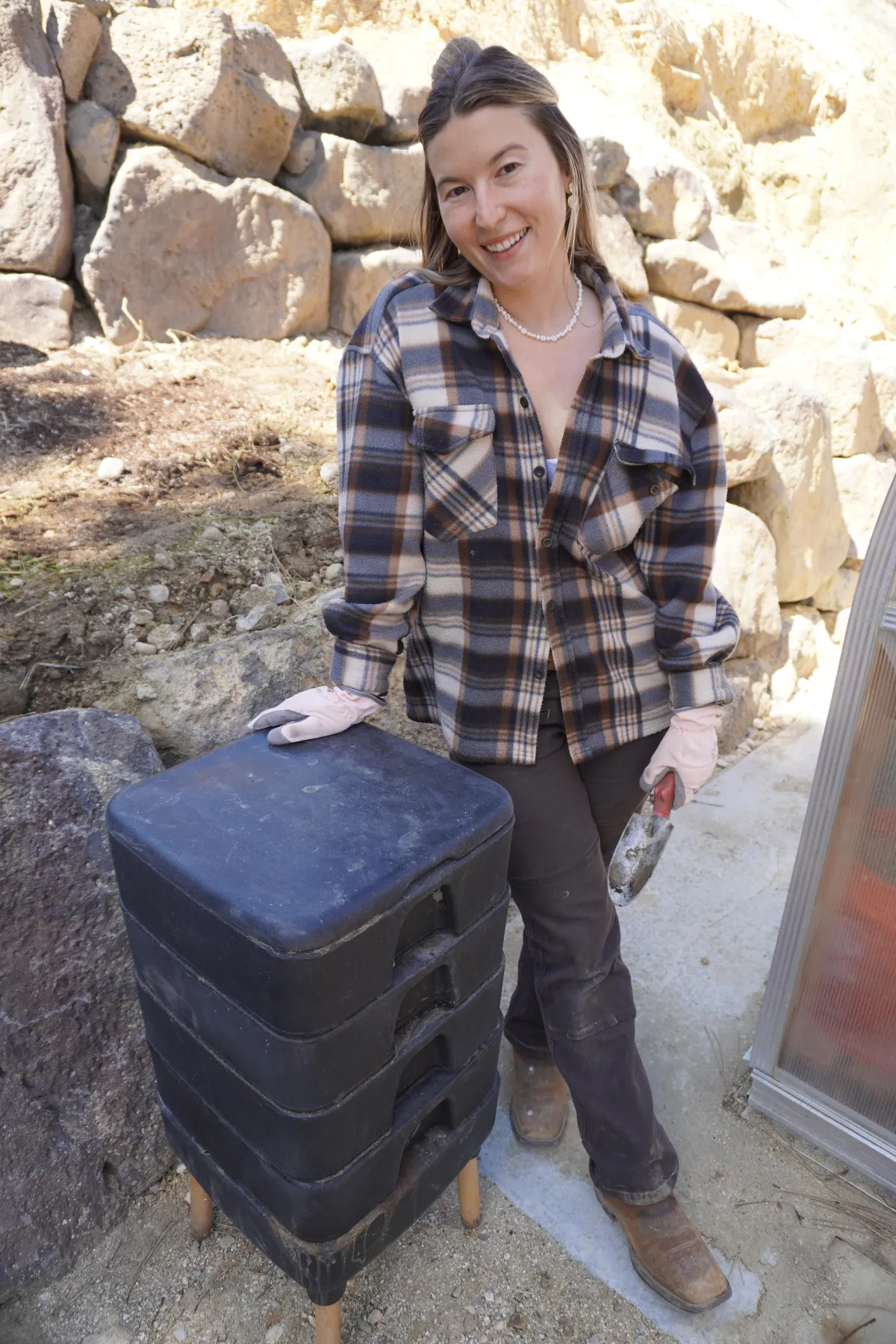
I source feed I can read the label on and actually understand. I grow mealworms for my birds because I'd rather know the protein source than trust a bag that says "natural ingredients."
This isn't a hobby. It's the most deliberate thing I do.

Community Builder
I'm not interested in chasing followers.
I'm interested in building a community of people who are asking the same questions I'm asking and doing something about it.
People who are done outsourcing their food supply to a system they don't fully trust.
People who are curious enough to look into it and stubborn enough to do something about it.
If that's you — you found the right page.
Why Trust ME
Because I'm not here to sell you a fantasy — I'm living the real thing.
I didn't grow up doing this. I learned the hard way: one frozen waterer, failed hatch, and rogue rooster at a time.
I built my homestead from scratch. Off-grid. In the mountains. With no blueprint and a lot of trial and error.
Here's what I know now that I didn't know then:
The information is out there. But most of it is either dressed up past the point of being useful, or so overwhelming it makes you want to give up before you start.
I share everything — what worked, what failed, what I'd do differently. From mealworms to meat birds. Soil to coop automation. Incubation humidity to lockdown day 18.
I'm not a guru. I'm someone who got fed up with the system, decided to build a way out of it, and documented everything along the way so you don't have to figure it all out alone.
Growing your own food is the most radical act of self-preservation we have left. I take that seriously, and you should too.
So if you want someone who gets it — someone who's walked through the overwhelm and is still walking, still building, still learning — You're in the right place.
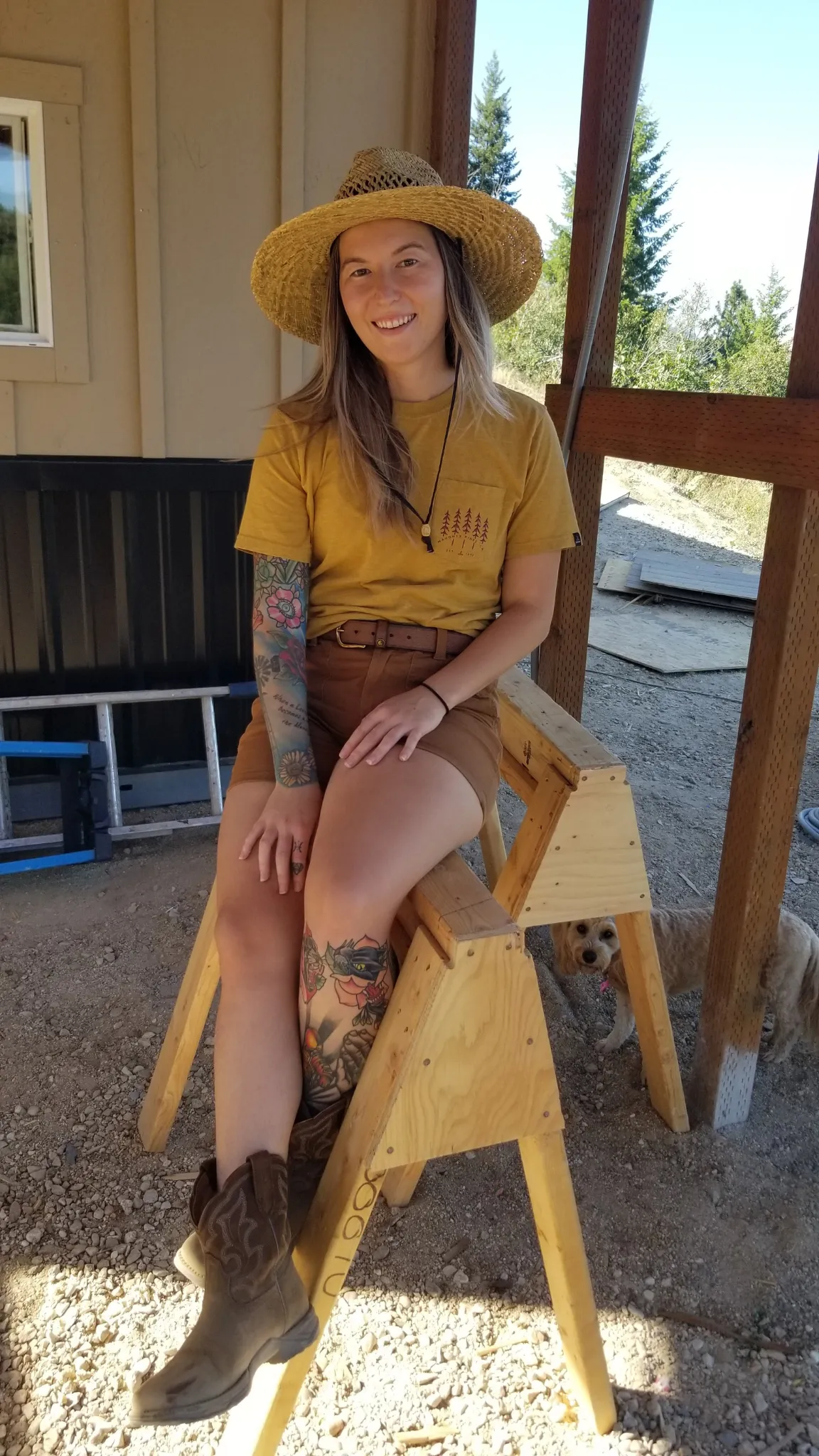
Why choose my course
Because Googling every chicken question at midnight isn’t a strategy.
My "Hatch to Harvest" course is the guide I wish I had when I started. Googling your way through a hatch at midnight isn't a system. It's a prayer.
I built Hatch to Harvest because when I started, I couldn't find a single resource that covered the full process — from picking the right egg to harvest day — without either dumbing it down or leaving out the parts that matter.
This is the course I built for myself and made available because you deserve more than a patchwork of YouTube videos and Facebook group opinions.
Everything from brooder setup to harvest. Every step in order. Hard-earned from doing it myself, off-grid, without a team.
It's not for people who want to dabble. It's for people who are ready to raise their own meat, know exactly what they're eating, and stop depending on a supply chain they can't see.
What problems can I solve
If you've ever felt any of this — keep reading...
Overwhelmed by conflicting advice and not sure who to actually trust.
Frustrated by courses that cost a lot and assume you already know things.
Ready to raise your own food but not sure where the first step is.
Done trusting labels and wanting to know the full chain from seed, egg, or chick to what's on your plate.
Suspicious that the food system isn't as stable as everyone says — and wanting to build something that doesn't depend on it.
I've been all of those things.
I'll walk you through every part of this — chickens, food, systems, sourcing — with clear practical steps from someone who's done it the hard way and figured out what actually works.
This isn't about being perfect. It's about being less dependent. One bird, one harvest, one skill at a time.
Read The Blog
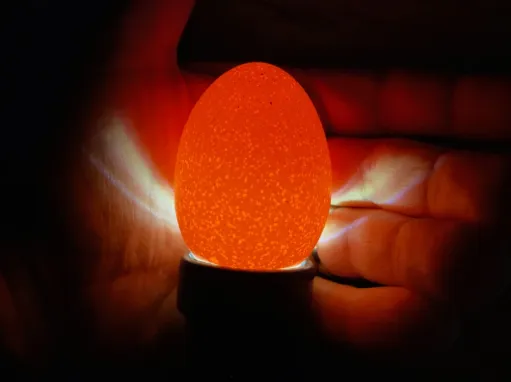
Common Misconceptions About Egg Incubation
Common Misconceptions About Egg Incubation
If you've ever thought about hatching your own chicks but felt intimidated by the process, you're not alone. Learning any new skill can be daunting. I remember buying my first incubator and it sat in the box for months because I didn't feel ready. But you can do it!
There's a LOT of misinformation floating around about incubating eggs—so today, we're busting some of the most common myths and setting the record straight!
Myth #1: You Need an Expensive Incubator
Truth: You don’t need a top-of-the-line, high-tech incubator to successfully hatch eggs!
While some high-end models have extra features like automatic egg turning and humidity control, plenty of budget-friendly incubators work just fine if you know how to manage the basics.
🔹 A simple incubator with steady temperature control, proper ventilation, and consistent humidity levels is all you need for a successful hatch.
🔹 Many homesteaders and backyard chicken keepers hatch eggs with affordable tabletop incubators.
🔹 Even DIY incubators can work—though they require a little extra monitoring.
The key is following a reliable incubation process—and I cover everything you need to know in my Egg Incubation Guide.
Myth #2: Incubating is Too Hard for Beginners
Truth: If you can follow simple steps, you can hatch eggs—no experience required!
I get it. The idea of managing temperature, humidity, and turning eggs can sound overwhelming. But guess what? Incubating eggs is actually super easy once you know what to do.
✔ Modern incubators do a lot of the work for you. Many have built-in thermometers, hygrometers, and automatic turners.
✔ You don’t have to be perfect—small fluctuations in temperature and humidity are normal.
✔ Step-by-step guidance makes all the difference—which is exactly why I created my incubation guide!
If you’ve been putting off incubating because you’re worried it’s too complicated, this is your sign to just start. I promise—it’s easier than you think!
Myth #3: Once You Put the Eggs in the Incubator, You Can Just Set It and Forget It
Truth: Incubating eggs isn’t hard, but it’s not completely hands-off either!
A lot of beginners assume that incubators do all the work—but that’s not entirely true. You still need to:
🔹 Monitor temperature & humidity daily – Even with automatic controls, slight adjustments might be needed.
🔹 Turn the eggs (if your incubator doesn’t) – Most eggs need to be turned at least three times a day to prevent the embryo from sticking to the shell.
🔹 Check for development – Candling eggs at days 7 and 14 helps ensure they are growing properly and lets you remove any that aren’t developing.
🔹 Lockdown period requires extra attention – The last few days before hatching (days 18-21) require stable humidity and no opening the incubator!
While it’s not complicated, it does require some involvement—but I’ll walk you through every step inside my Egg Incubation Guide so you can hatch healthy, thriving chicks with confidence.
Have You Heard These Myths Before?
Hatching your own chicks is one of the most fun, rewarding, and budget-friendly ways to grow your flock—and it’s WAY easier than you might think.
Which of these myths have you heard before? Did any of them hold you back from trying incubation? Let me know in the comments!
Ready to start incubating? Grab my Egg Incubation Guide for step-by-step instructions! And if you want to take your chicken-raising skills to the next level, my full Chicken Course will guide you from hatch to harvest.

Annie's Homestead is not affiliated by Facebook™ in any way. Facebook™ is a registered trademark of Facebook™ Inc
Branding and Website by RoyalT Studio