



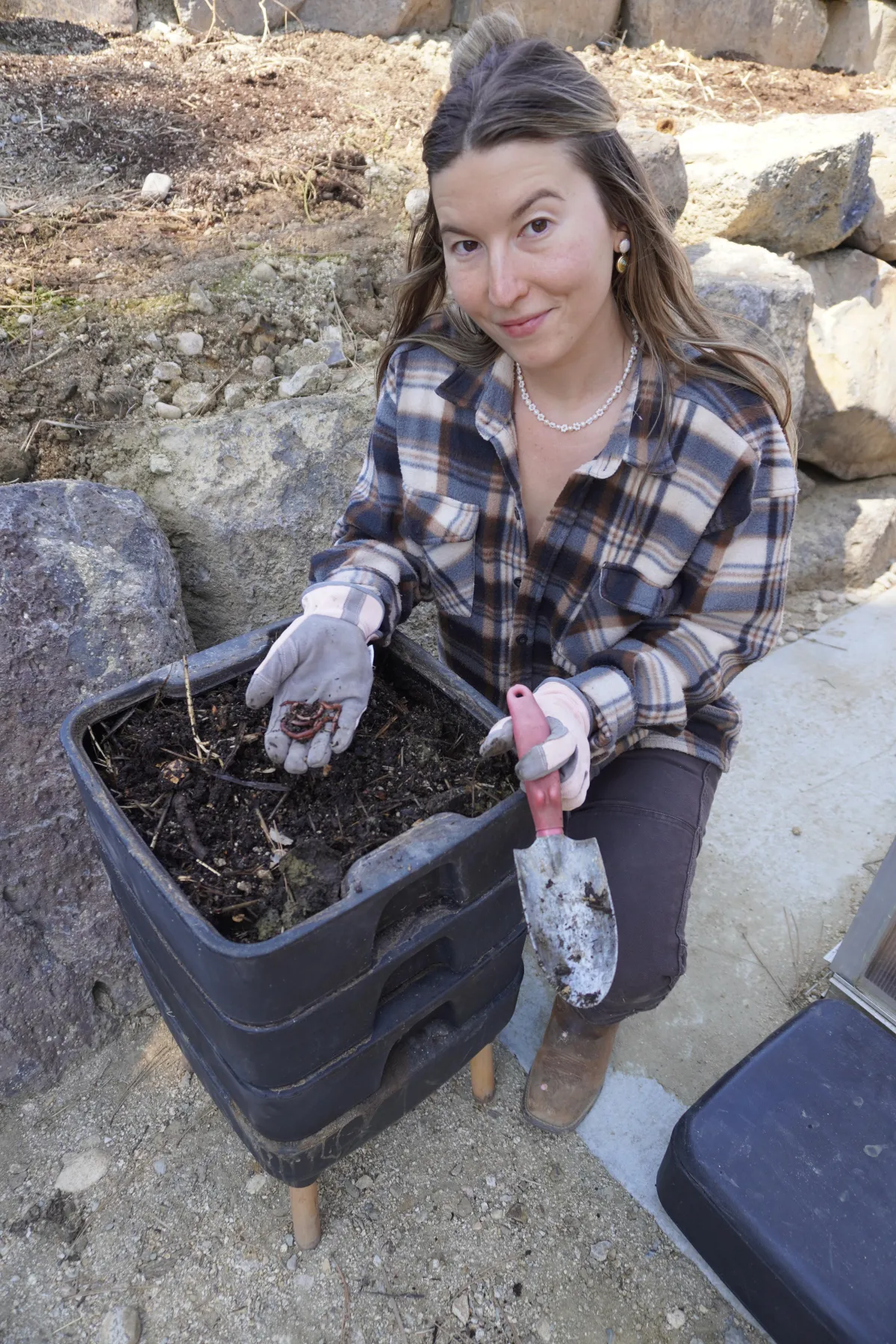
Hey, I'm Annie
I'm not here to sell you a fantasy version of homestead life.
I'm living the real thing — off the grid, in the Idaho mountains, with a flock I hatched myself, a grow room, a greenhouse, and a very strong opinion about what's in your food.
If you found me through the chemtrail content — welcome.
If you found me through the chicken content — also welcome.
They're the same page. Stick around and you'll see why.

Midwest girlie
I grew up in South Dakota. Real food came from someone you knew. Slow living wasn't a trend — it was just Tuesday.
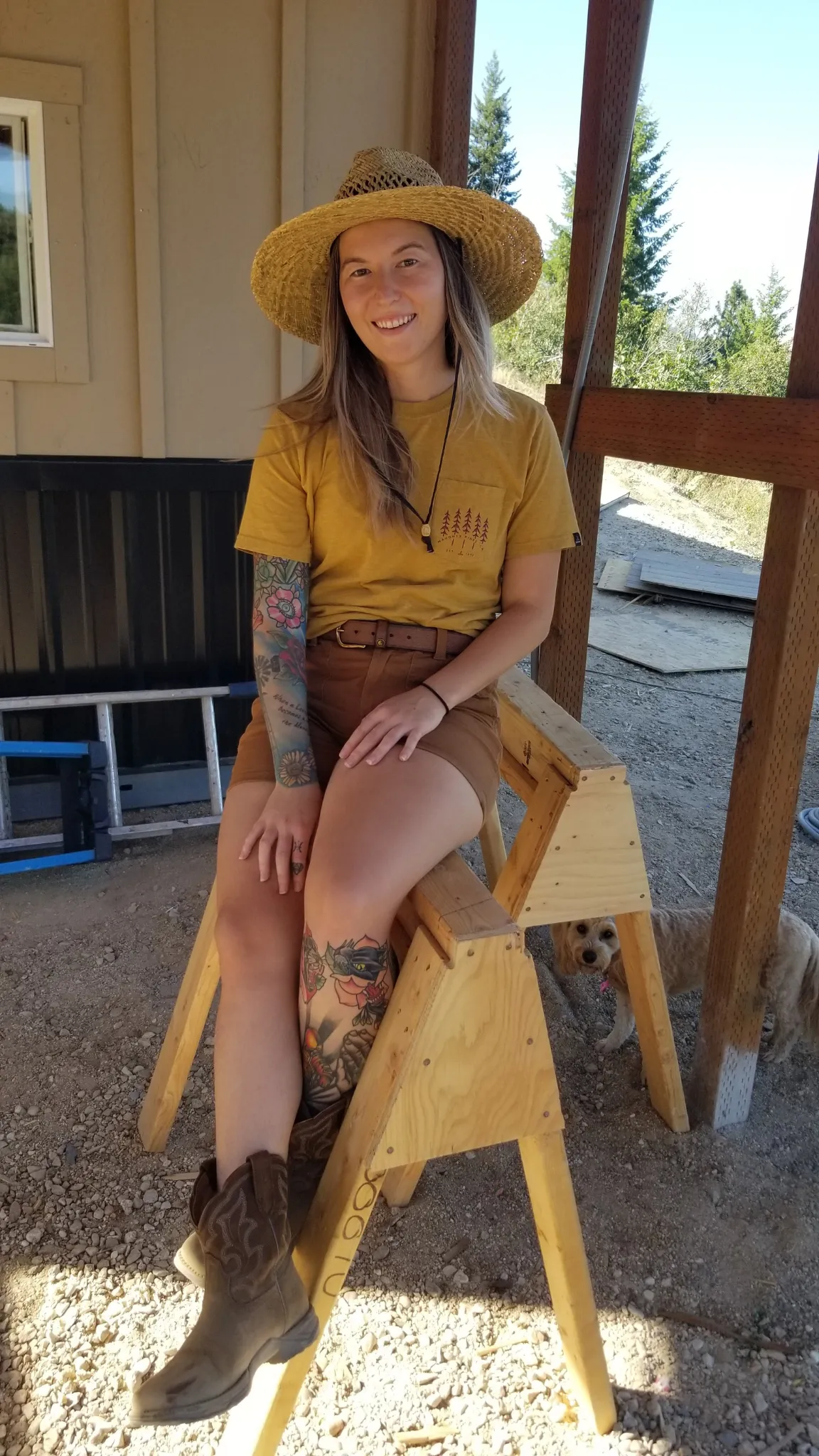
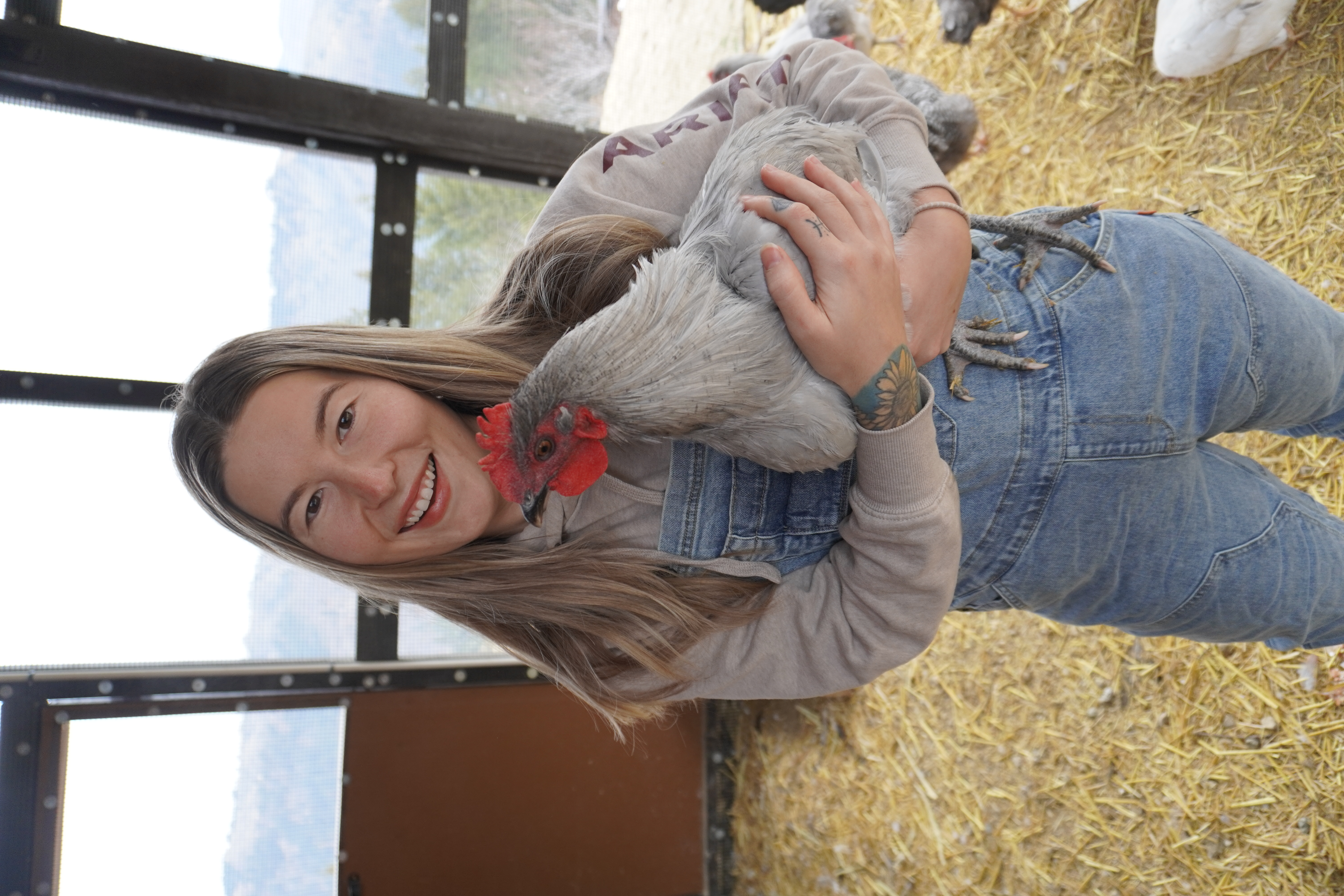
These days I live tucked into the Idaho mountains, off-grid by design. I have a flock of birds I hatched from eggs I collected from birds I raised. I have an indoor grow room and a greenhouse. I source feed with no soy, no corn, no seed oils. My birds free-range on actual Idaho ground every single day.
I didn't move here for the aesthetic. I moved here because the further I got from the supply chain, the better I felt about what I was putting in my body.

Green Thumb Guru
I grow what I eat because I don't trust what I can't trace.
I hatch my own flock because I want to know every part of the chain — what the parent birds ate, what the ground looked like, what went into the egg that went into my breakfast.
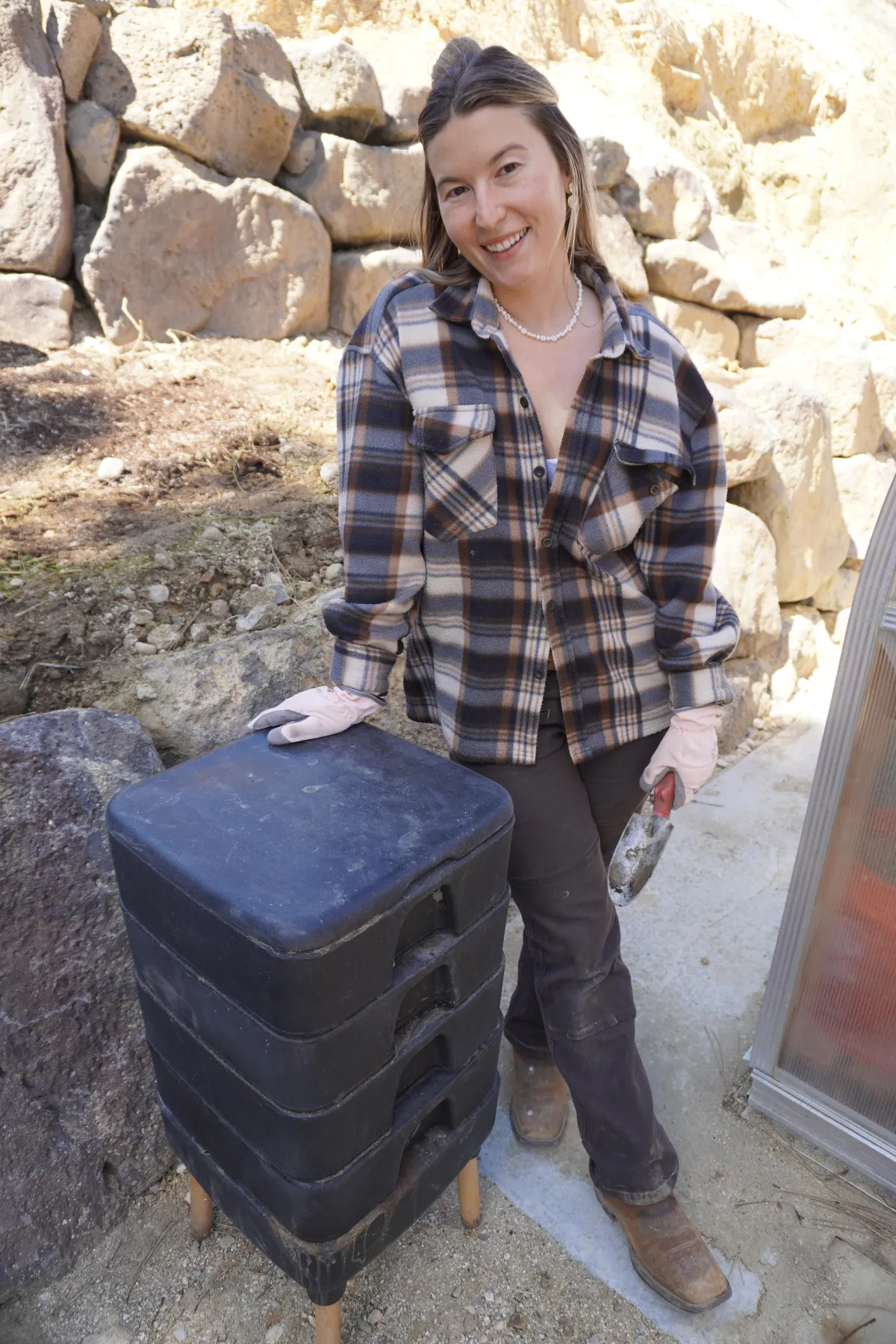
I source feed I can read the label on and actually understand. I grow mealworms for my birds because I'd rather know the protein source than trust a bag that says "natural ingredients."
This isn't a hobby. It's the most deliberate thing I do.

Community Builder
I'm not interested in chasing followers.
I'm interested in building a community of people who are asking the same questions I'm asking and doing something about it.
People who are done outsourcing their food supply to a system they don't fully trust.
People who are curious enough to look into it and stubborn enough to do something about it.
If that's you — you found the right page.
Why Trust ME
Because I'm not here to sell you a fantasy — I'm living the real thing.
I didn't grow up doing this. I learned the hard way: one frozen waterer, failed hatch, and rogue rooster at a time.
I built my homestead from scratch. Off-grid. In the mountains. With no blueprint and a lot of trial and error.
Here's what I know now that I didn't know then:
The information is out there. But most of it is either dressed up past the point of being useful, or so overwhelming it makes you want to give up before you start.
I share everything — what worked, what failed, what I'd do differently. From mealworms to meat birds. Soil to coop automation. Incubation humidity to lockdown day 18.
I'm not a guru. I'm someone who got fed up with the system, decided to build a way out of it, and documented everything along the way so you don't have to figure it all out alone.
Growing your own food is the most radical act of self-preservation we have left. I take that seriously, and you should too.
So if you want someone who gets it — someone who's walked through the overwhelm and is still walking, still building, still learning — You're in the right place.
Why choose my course
Because Googling every chicken question at midnight isn’t a strategy.
My "Hatch to Harvest" course is the guide I wish I had when I started. Googling your way through a hatch at midnight isn't a system. It's a prayer.
I built Hatch to Harvest because when I started, I couldn't find a single resource that covered the full process — from picking the right egg to harvest day — without either dumbing it down or leaving out the parts that matter.
This is the course I built for myself and made available because you deserve more than a patchwork of YouTube videos and Facebook group opinions.
Everything from brooder setup to harvest. Every step in order. Hard-earned from doing it myself, off-grid, without a team.
It's not for people who want to dabble. It's for people who are ready to raise their own meat, know exactly what they're eating, and stop depending on a supply chain they can't see.
What problems can I solve
If you've ever felt any of this — keep reading...
Overwhelmed by conflicting advice and not sure who to actually trust.
Frustrated by courses that cost a lot and assume you already know things.
Ready to raise your own food but not sure where the first step is.
Done trusting labels and wanting to know the full chain from seed, egg, or chick to what's on your plate.
Suspicious that the food system isn't as stable as everyone says — and wanting to build something that doesn't depend on it.
I've been all of those things.
I'll walk you through every part of this — chickens, food, systems, sourcing — with clear practical steps from someone who's done it the hard way and figured out what actually works.
This isn't about being perfect. It's about being less dependent. One bird, one harvest, one skill at a time.
Read The Blog
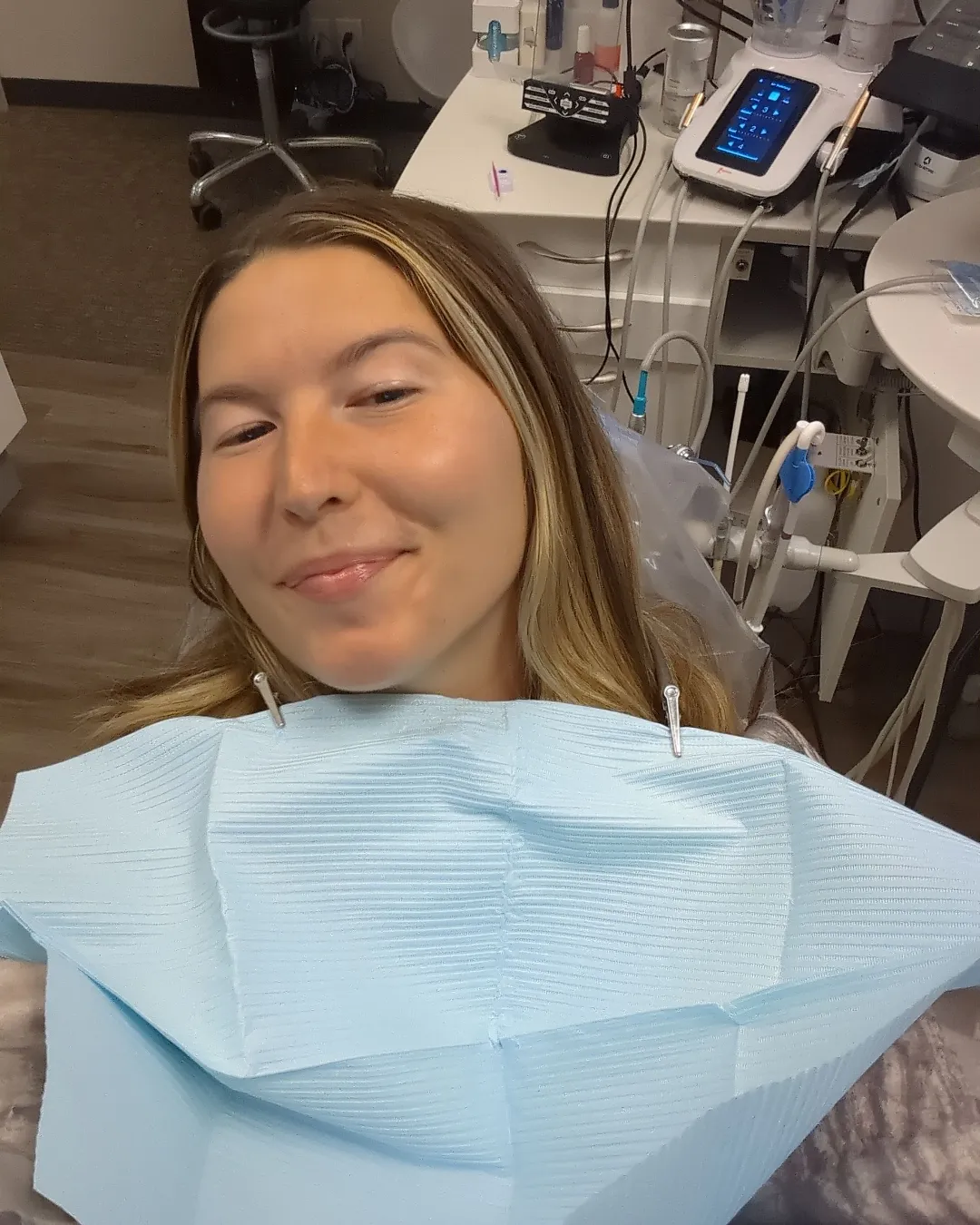
Your Dentist Sends You Home With Ibuprofen. I Did This Instead.
Your Dentist Sends You Home With Ibuprofen. I Did This Instead.
Surgery is only half the equation.
What you do after is everything. Your body just went through significant trauma — bone was debrided, tissue was cut, your immune system is on high alert, and your liver is working overtime to clear anesthesia. Most people go home, take the ibuprofen, eat soft foods, and hope for the best.
I went in with a plan.
Here's exactly what I did after my cavitation surgery to make sure I healed fully — not just on the surface, but at the bone level.
1. Vitamin C IV — The Day Before AND the Day After Surgery
I went to the Karlfeldt Center in Meridian, Idaho for this — both the day before and the day after surgery.
What is the Karlfeldt Center? The Karlfeldt Center is a full-service integrative naturopathic and oncology wellness center in Meridian, Idaho, run by Dr. Michael Karlfeldt, ND, PhD — a globally recognized expert in integrative medicine with over 30 years of experience. They offer everything from IV nutrition therapy and peptides to ozone therapy, neurofeedback, and advanced detox protocols. If you're local to the Treasure Valley and you want to work with people who actually address root causes, this is the place.
Why Vitamin C IV around surgery? High-dose Vitamin C delivered intravenously floods your tissues with antioxidants right when they need it most. It supports your immune system, helps your body clear anesthesia faster, and reduces oxidative stress at the surgical site. Taking oral Vitamin C doesn't come close — IV delivery bypasses digestion entirely and gets it into your bloodstream at doses you could never absorb orally.
Going in the day before means your body is already loaded and prepared. Going the day after means you're giving your tissues immediate recovery support before the real healing work begins.
2. Glutathione IV — After Surgery
Also at the Karlfeldt Center.
Glutathione is your body's master antioxidant — the most powerful detoxification molecule your body produces naturally. After any surgical procedure you're dealing with anesthesia, surgical trauma, and inflammation all at once. Your liver is working hard.
A glutathione IV helps your liver process and clear all of it faster, so your body can redirect its energy toward actual tissue and bone healing instead of detox overload. Think of it as giving your system a clean slate to heal from.
3. Peptides — BPC-157 & TB4-Frag from Integrative Peptides
These were a game changer for my recovery.
BPC-157 (Body Protection Compound) is one of the most studied peptides for tissue and bone repair. It accelerates healing at the cellular level, reduces inflammation, and supports the regeneration of connective tissue and bone. It's been shown to help heal tendons, ligaments, gut lining, and bone — which made it a perfect fit for recovering from oral surgery.
TB4-Frag (Thymosin Beta-4 Fragment) supports tissue regeneration and reduces inflammation in damaged areas. It works alongside BPC-157 to support the body's natural healing response.
I noticed faster healing than I expected. My recovery timeline was shorter than what most people describe. I genuinely believe these peptides played a significant role in that.
I used Integrative Peptides brand — high quality, third-party tested.
4. Salt Water Syringe Rinse — Redmond Real Salt
After cavitation surgery you have actual holes in your jaw bone that need to stay clean while they close.
I was on a liquid diet but even smoothie seeds and small food particles were getting trapped in the extraction sites. Left uncleaned, those can cause infection — which is the last thing you want when you're trying to heal bone.
I used a curved-tip syringe filled with warm Redmond Real Salt water to flush the sites out gently after every meal. Redmond is an unrefined mineral salt from Utah — no additives, no anti-caking agents, just clean salt with trace minerals intact.
This step is unglamorous. It's tedious. But it is critical. Don't skip it.
5. Red Light Therapy Wand on the Stitches
Red light therapy (also called photobiomodulation) increases cellular energy production and circulation right at the site of application. At the tissue level, it supports faster cell regeneration and reduces inflammation.
I used the USUIE Pro wand directly on my stitches to promote healing from the outside in. I genuinely think this shortened my healing time — my stitches dissolved faster than expected and I had minimal swelling compared to what most people report.
Red light therapy on oral stitches is one of those things that sounds unusual until you understand the mechanism — then it makes complete sense.
6. Uncle Harry's Alkalizing Mineral Toothpaste
No fluoride. No synthetic chemicals. No SLS. No garbage.
Uncle Harry's is what I use daily and it was especially important during recovery when my mouth needed to stay clean without being hit with harsh conventional toothpaste ingredients. The alkalizing minerals support a healthy oral pH, which is important for both healing and long-term oral health.
If you're still using conventional toothpaste — especially during any kind of dental recovery — it's worth making the switch.
The Bigger Picture
Everything I did comes back to the same philosophy I apply to everything on the homestead: work with your body, not against it.
Conventional post-surgical care is designed to manage symptoms — pain relief, antibiotics if needed, and wait. What I did was give my body every tool it needed to actually heal — at the cellular level, at the bone level, from the inside out.
The Karlfeldt Center, BioSmiles, quality peptides, red light therapy — none of this is magic. It's just being intentional about what your body needs and actually providing it.
Resources
📍 The Karlfeldt Center — Meridian, Idaho | thekarlfeldtcenter.com | @thekarlfeldtcenter
📍 BioSmiles — Eagle, Idaho | biosmiles.com | @theboisenaturaldentist
🧬 Integrative Peptides — BPC-157 Pure & TB4-Frag Max
💡 USUIE Pro Red Light Wand — usuie.com
🪥 Uncle Harry's Alkalizing Mineral Toothpaste | @uncle_harrys
🧂 Redmond Real Salt
This is part 3 of my dental health series. Read Part 1 on amalgam mercury filling removal and Part 2 on cavitation surgery if you haven't yet.
Disclaimer: I'm not a doctor and this is not medical advice. This is my personal experience and what worked for me. Always do your own research and consult a qualified healthcare provider before starting any new health protocol.
Annie's Homestead is not affiliated by Facebook™ in any way. Facebook™ is a registered trademark of Facebook™ Inc
Branding and Website by RoyalT Studio