


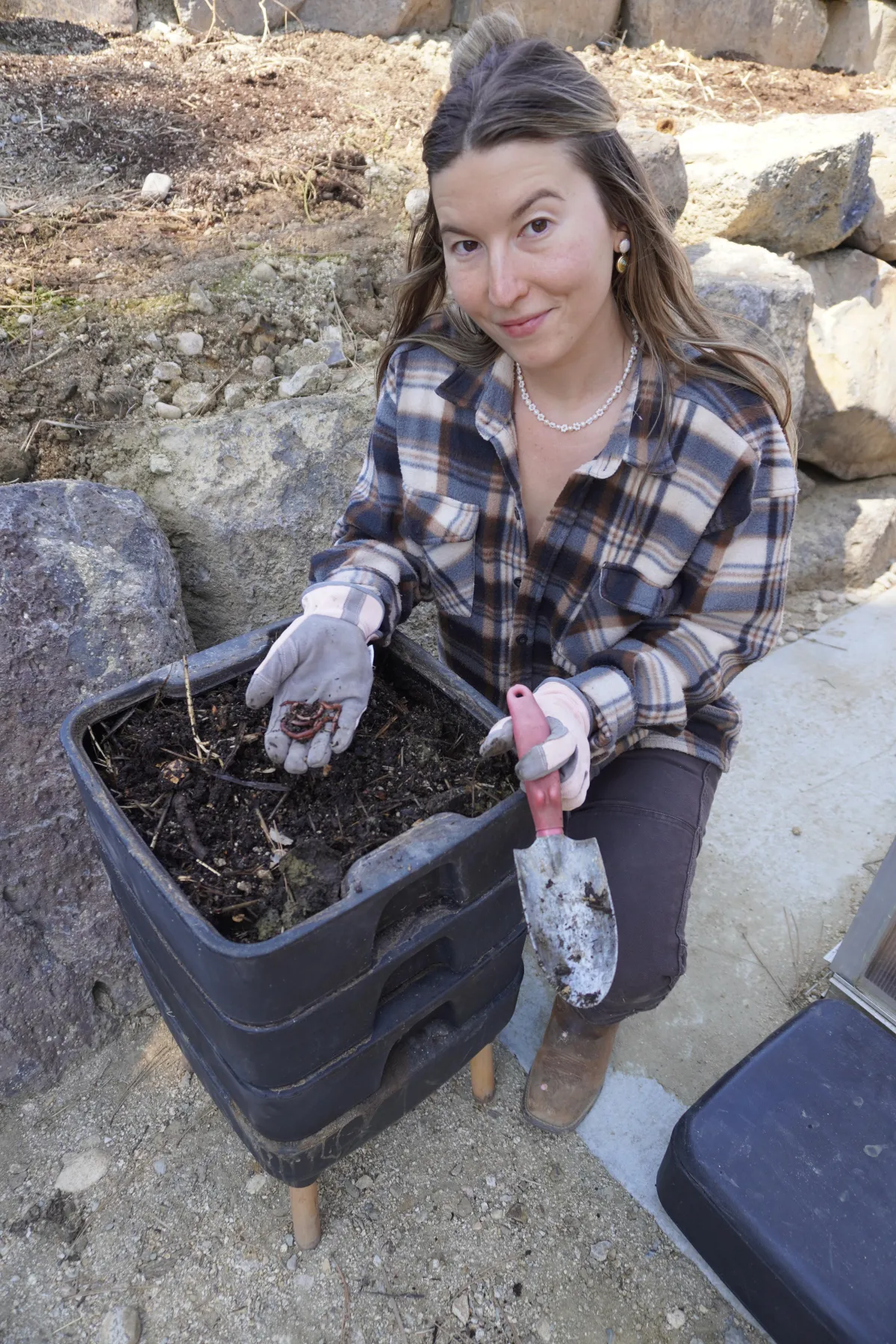
Hey, I'm Annie
I'm not here to sell you a fantasy version of homestead life.
I'm living the real thing — off the grid, in the Idaho mountains, with a flock I hatched myself, a grow room, a greenhouse, and a very strong opinion about what's in your food.
If you found me through the chemtrail content — welcome.
If you found me through the chicken content — also welcome.
They're the same page. Stick around and you'll see why.

Midwest girlie
I grew up in South Dakota. Real food came from someone you knew. Slow living wasn't a trend — it was just Tuesday.
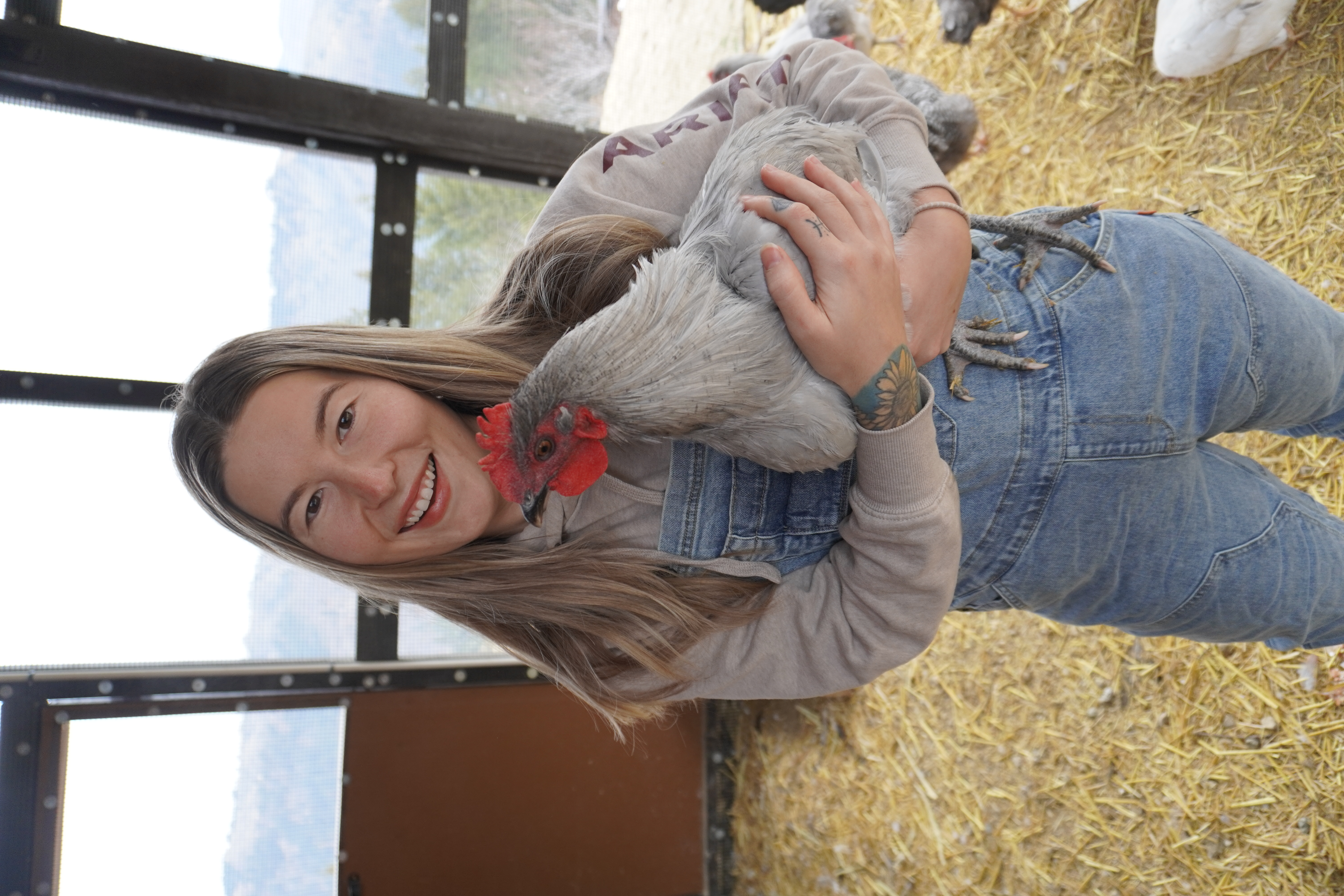
These days I live tucked into the Idaho mountains, off-grid by design. I have a flock of birds I hatched from eggs I collected from birds I raised. I have an indoor grow room and a greenhouse. I source feed with no soy, no corn, no seed oils. My birds free-range on actual Idaho ground every single day.
I didn't move here for the aesthetic. I moved here because the further I got from the supply chain, the better I felt about what I was putting in my body.

Green Thumb Guru
I grow what I eat because I don't trust what I can't trace.
I hatch my own flock because I want to know every part of the chain — what the parent birds ate, what the ground looked like, what went into the egg that went into my breakfast.
I source feed I can read the label on and actually understand. I grow mealworms for my birds because I'd rather know the protein source than trust a bag that says "natural ingredients."
This isn't a hobby. It's the most deliberate thing I do.

Community Builder
I'm not interested in chasing followers.
I'm interested in building a community of people who are asking the same questions I'm asking and doing something about it.
People who are done outsourcing their food supply to a system they don't fully trust.
People who are curious enough to look into it and stubborn enough to do something about it.
If that's you — you found the right page.
Why Trust ME
Because I'm not here to sell you a fantasy — I'm living the real thing.
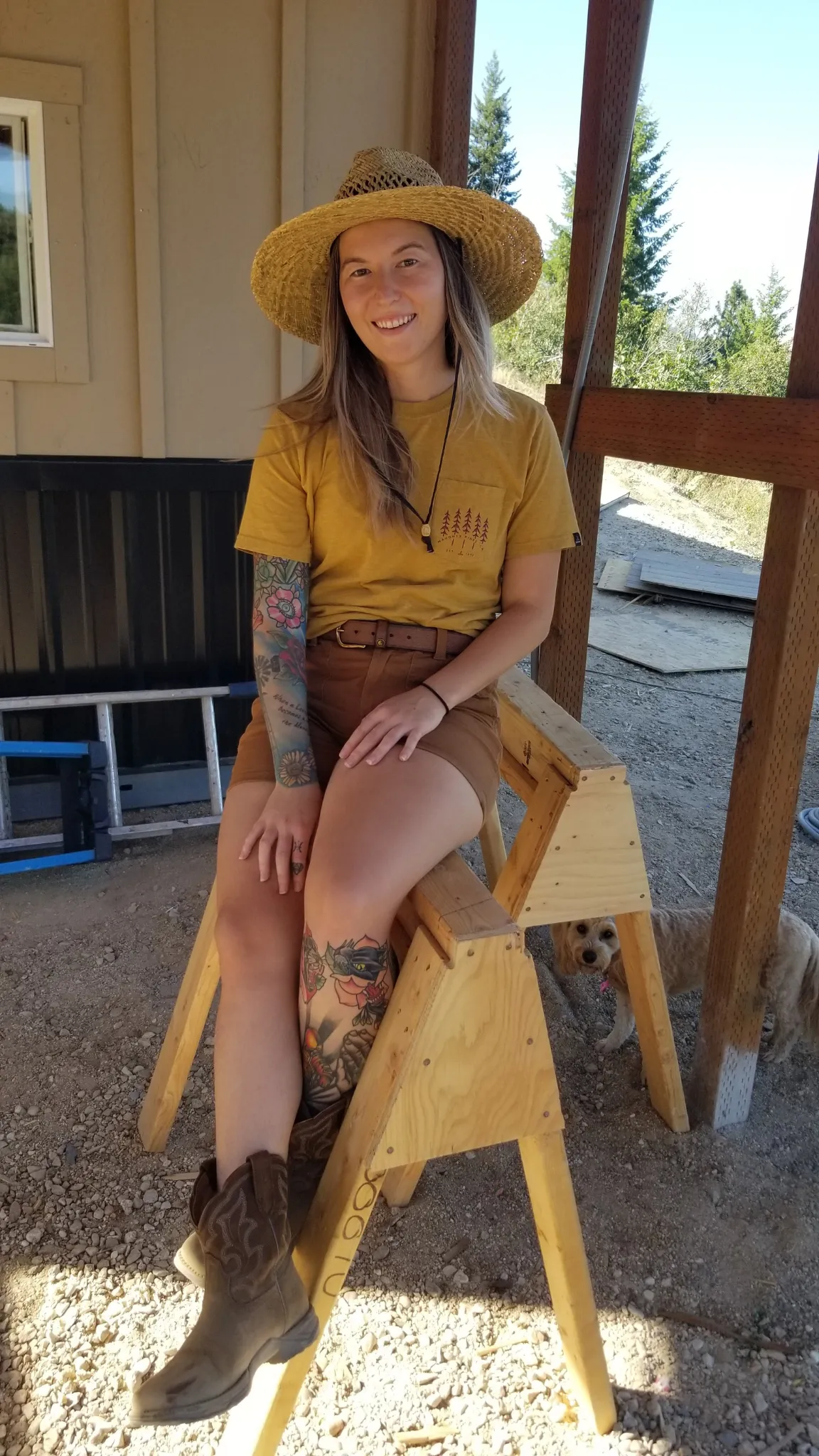
I didn't grow up doing this. I learned the hard way: one frozen waterer, failed hatch, and rogue rooster at a time.
I built my homestead from scratch. Off-grid. In the mountains. With no blueprint and a lot of trial and error.
Here's what I know now that I didn't know then:
The information is out there. But most of it is either dressed up past the point of being useful, or so overwhelming it makes you want to give up before you start.
I share everything — what worked, what failed, what I'd do differently. From mealworms to meat birds. Soil to coop automation. Incubation humidity to lockdown day 18.
I'm not a guru. I'm someone who got fed up with the system, decided to build a way out of it, and documented everything along the way so you don't have to figure it all out alone.
Growing your own food is the most radical act of self-preservation we have left. I take that seriously, and you should too.
So if you want someone who gets it — someone who's walked through the overwhelm and is still walking, still building, still learning — You're in the right place.
Why choose my course
Because Googling every chicken question at midnight isn’t a strategy.
My "Hatch to Harvest" course is the guide I wish I had when I started. Googling your way through a hatch at midnight isn't a system. It's a prayer.
I built Hatch to Harvest because when I started, I couldn't find a single resource that covered the full process — from picking the right egg to harvest day — without either dumbing it down or leaving out the parts that matter.
This is the course I built for myself and made available because you deserve more than a patchwork of YouTube videos and Facebook group opinions.
Everything from brooder setup to harvest. Every step in order. Hard-earned from doing it myself, off-grid, without a team.
It's not for people who want to dabble. It's for people who are ready to raise their own meat, know exactly what they're eating, and stop depending on a supply chain they can't see.
What problems can I solve
If you've ever felt any of this — keep reading...
Overwhelmed by conflicting advice and not sure who to actually trust.
Frustrated by courses that cost a lot and assume you already know things.
Ready to raise your own food but not sure where the first step is.
Done trusting labels and wanting to know the full chain from seed, egg, or chick to what's on your plate.
Suspicious that the food system isn't as stable as everyone says — and wanting to build something that doesn't depend on it.
I've been all of those things.
I'll walk you through every part of this — chickens, food, systems, sourcing — with clear practical steps from someone who's done it the hard way and figured out what actually works.
This isn't about being perfect. It's about being less dependent. One bird, one harvest, one skill at a time.
Read The Blog
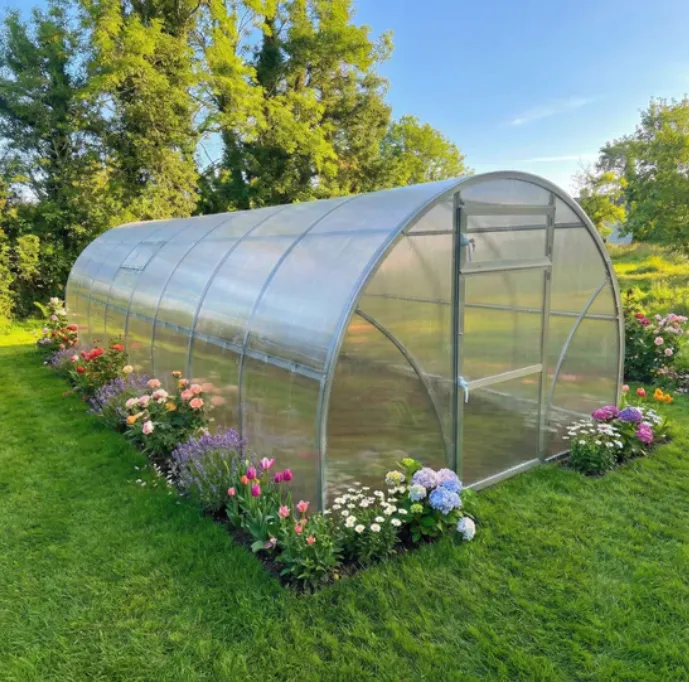
Why We Grow Inside the Greenhouse as Much as We Can
Why We Grow Inside the Greenhouse as Much as We Can
When people visit the homestead and see how much we use our greenhouse, the question is always the same: "Why don't you just grow outside? You have so much space."
Honestly, it's a valid question. There's something undeniably romantic about rows of vegetables stretching out under an open sky. And we do grow outside. But over the years, the greenhouse has become the heart of how we grow — and there are real, honest reasons for that.
Some of them are practical. Some of them are a little harder to talk about. But they're all worth sharing.
1. Nothing is truly organic under an aerosol sky
We work hard to grow clean food. We choose our seeds carefully, build our soil naturally, and skip every synthetic input we can. But here's the thing nobody in the organic gardening world wants to talk about: what falls from the sky is outside our control.
Whether you've looked into geoengineering, cloud seeding, or atmospheric modification programs — or whether you're simply paying attention to what's happening overhead — the reality is the same. Open-air growing means your plants, your soil, and your water are exposed to whatever is in the air and rain above you.
We can't certify what falls from the sky as organic. Nobody can.
The greenhouse doesn't solve everything. But it gives us a layer of protection that open-air growing simply can't.
For us, that matters. It's not about fear — it's about doing what we can, with what we have, to grow the cleanest food possible for our family.
2. Season extension changes everything
Here in our climate, the growing season outside is short. Blink and you've missed it. The greenhouse changes that completely.
We start seeds weeks — sometimes months — earlier than we could outside. We carry crops well into fall and even through winter with cold-hardy varieties. We're harvesting greens in December when the ground outside is frozen solid.
That kind of extension isn't just about convenience. For a homestead trying to feed a family year-round, it's the difference between dependence and resilience. Between buying lettuce at the store in February and cutting it fresh from your own bed.
The greenhouse gives us growing seasons that our outdoor space never could — and that changes the whole rhythm of how we eat.
3. Protection from animals — the underrated reason
Let me tell you: the wildlife around here does not care about your hard work.
Deer, rabbits, groundhogs, birds — they are persistent, creative, and utterly shameless. We've lost entire beds overnight to animals that somehow found a way through or over whatever barrier we thought was sufficient.
Inside the greenhouse? That problem disappears. No deer netting, no chicken wire perimeter, no waking up to find your brassicas stripped to the stem. The plants are protected, and we can actually relax about what we'll find in the morning.
It sounds simple, but after enough seasons of losing crops to wildlife, "the animals can't get in" becomes a very compelling reason on its own.
TLDR: The bigger picture
Reason 01
Cleaner growing environment
A layer of protection from whatever is in the open air — rain, aerosols, atmospheric fallout — that open-air growing can't provide.
Reason 02
A longer, more productive season
Earlier starts, later harvests, and year-round growing that makes real food independence possible.
Reason 03
Reliable protection from wildlife
No deer, no rabbits, no groundhogs. Just your plants, growing the way you intended.
We still grow outside. We always will. There's beauty and value in it that the greenhouse can't replace. But when it comes to where we put our most important crops — the ones we're counting on to feed our family — the greenhouse wins every time.
We can't control everything.
We can't control the weather, the air, or what falls from the sky.
But we can be intentional about the environment we grow in.
And for us, that intention lives inside the greenhouse.
If you've been on the fence about building or investing in a greenhouse, I hope this gives you a clearer picture of why we rely on ours the way we do. It's one of the best decisions we've made on this homestead — and we'd make it again without hesitation.
Annie's Homestead is not affiliated by Facebook™ in any way. Facebook™ is a registered trademark of Facebook™ Inc
Branding and Website by RoyalT Studio