



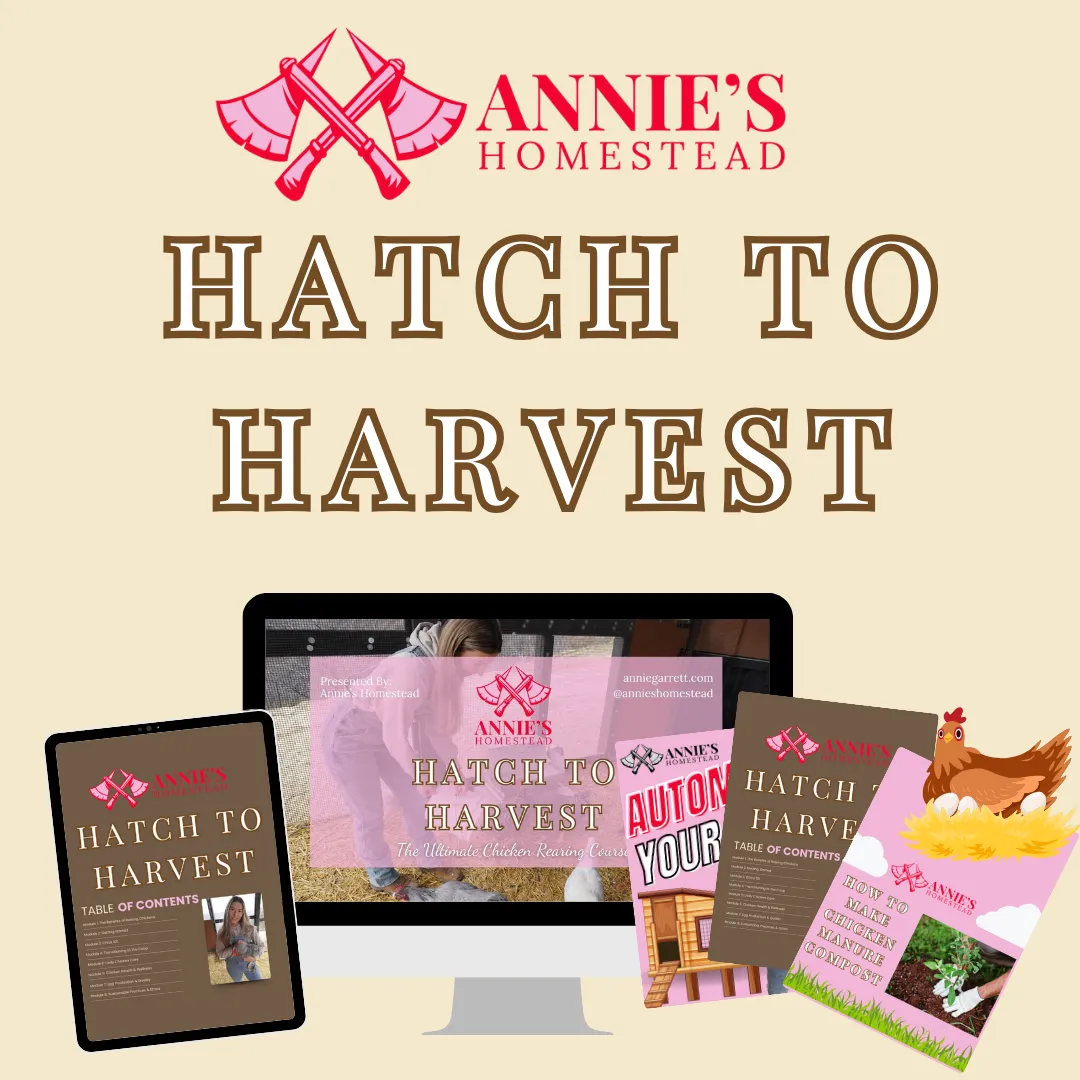
Welcome to Annie's Homestead
You stopped trusting the system.
Now let's build your way out of it
Learn how to grow real food, real birds, for real independence.
Does this sound familiar?
You've been reading labels and not likeing what you see.
You don't fully trust the grocery store, the supply chain, or what the label actually means. You're not paranoid. You're paying attention. And you're ready to do something about it.You want to know where your food actually comes from.
You want to know the bird, the feed, the ground it walked on. You want the full chain — and you want to own it.You’re done waiting for the system to fix itself.
Whether you have five acres or a back patio, you're ready to start building something that doesn't depend on anyone else. One seed. One egg. One jar at a time.
If any of that sounds like you — you're exactly who this is for.
Most homesteading content online is either a Pinterest fantasy or a 47-step overwhelm spiral. Neither helps you actually do anything.
This isn't that.
Annie's Homestead is no-gatekeep, straight-to-the-point resources for people who are done outsourcing their food supply to a system they don't trust. We go into the detail. We share what actually works. And we don't pretend it's simpler than it is — because you're smart enough to handle the real version.
That's where Annie's Homestead comes in.

Start exactly where you are.
You don't need land, livestock, or a barn. You need a direction and someone who's actually done it. Whether you have a backyard or a window ledge, the first step is the same: start something you can eat.

Know what's in your food — because you put it there.
From egg selection to hatch day. From mealworms to free-range. From seed to harvest. Annie covers the full chain because the full chain is the whole point.

Build skills that make you less dependent.
Fermentation. Incubation. Coop automation. Food preservation. Every skill you learn is one less thing you need from a system you don't trust. That's not a hobby. That's a strategy.
Free: Automate Your Coop
Want to streamline your chores?
Less time on chores.
More time on everything else.
The exact automations Annie uses on her off-grid Idaho homestead — automatic doors, refillable waterers, everything that runs the coop so she doesn't have to babysit it.
Free. Because we don't gatekeep here.
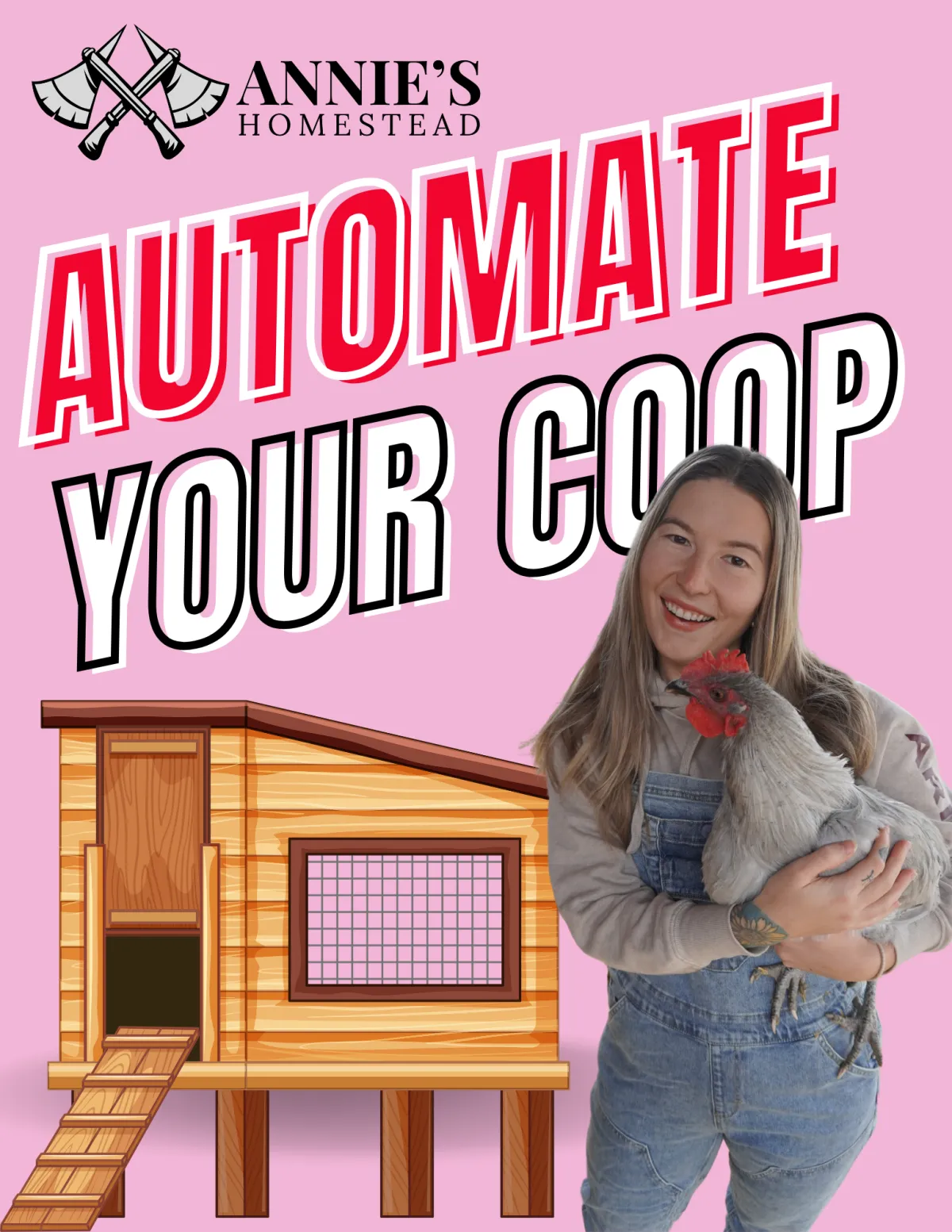
Hey There,
I'm Annie
I'm here to help you leave the system with ease
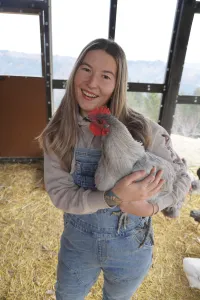
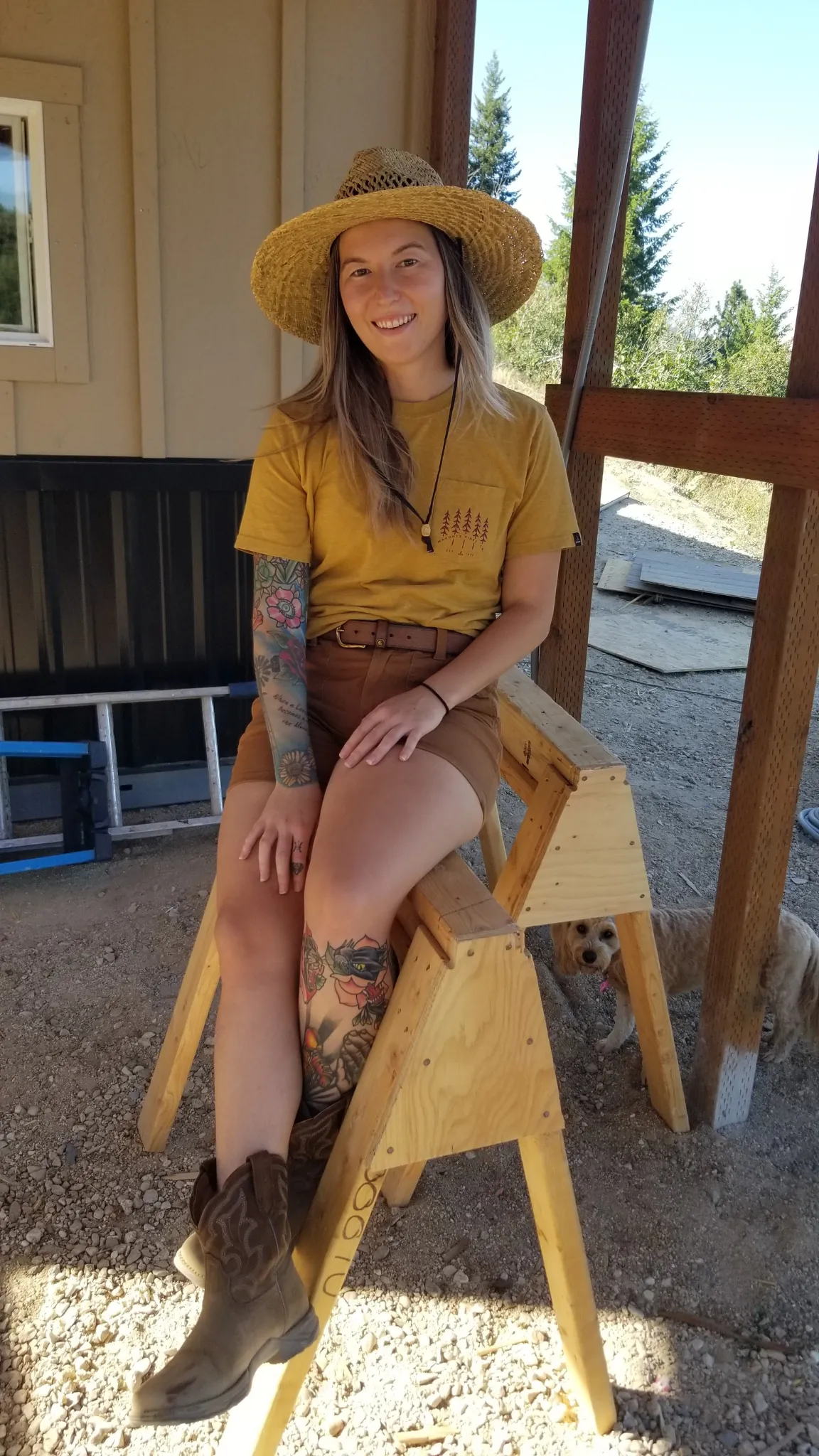
I live off-grid in the Idaho mountains with a flock of birds I hatched myself, an indoor grow room, and a greenhouse — because I'd rather know exactly what's going into my food than trust a label that doesn't have to tell me everything.
I built Annie's Homestead for the person who's started asking questions they can't unask. The person who reads ingredients now. The person who looked at the Palantir-USDA contract and thought — okay, it's time to build my own supply chain.
No sugar-coating. No gatekeeping. Just the real process, the real numbers, and honest answers about what it actually takes.
You found this page for a reason. Stick around.
Top Resources
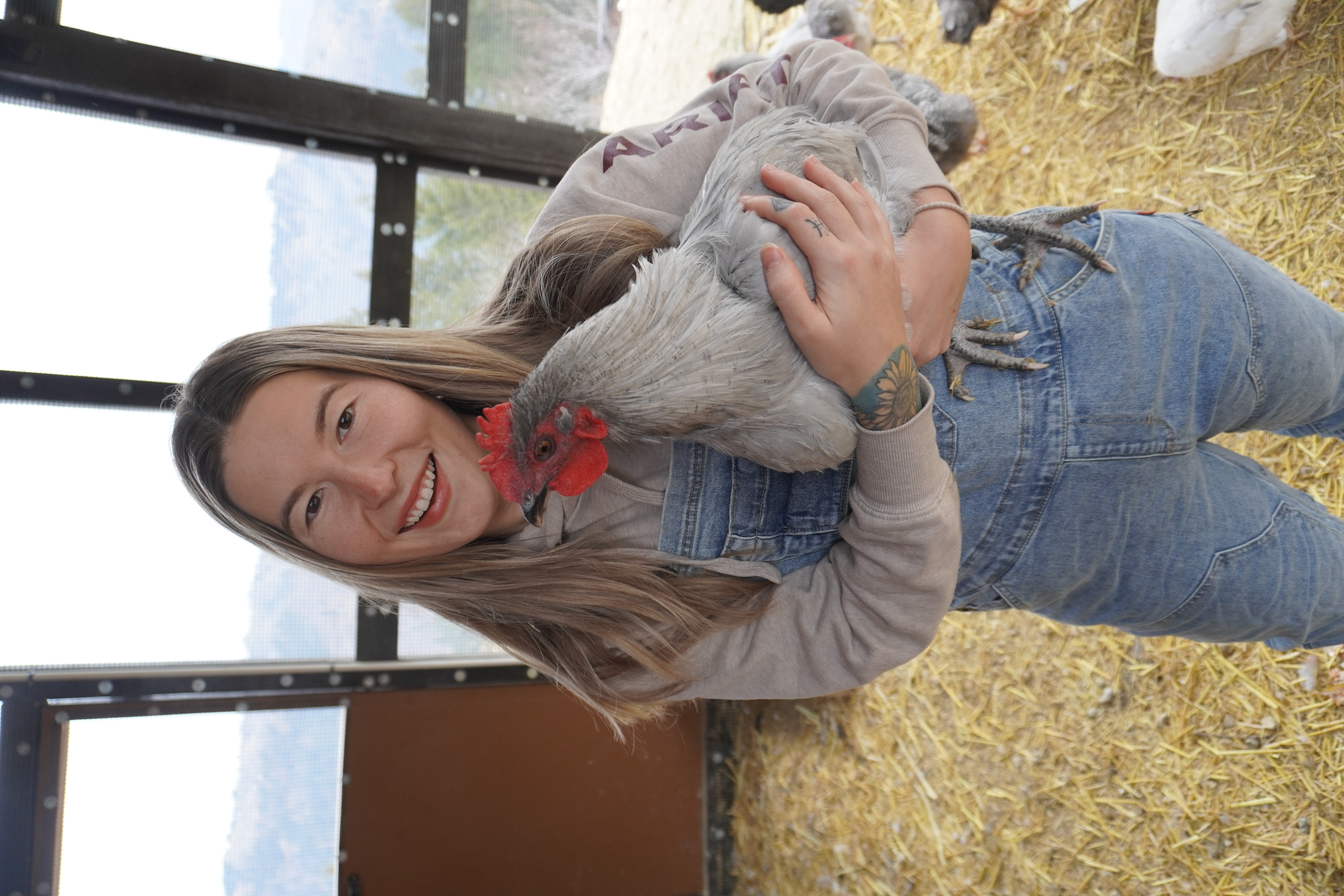
Streamline your chore list with our chicken coop automation list

Prepare For Emergencies with our Chicken First Aid Kit
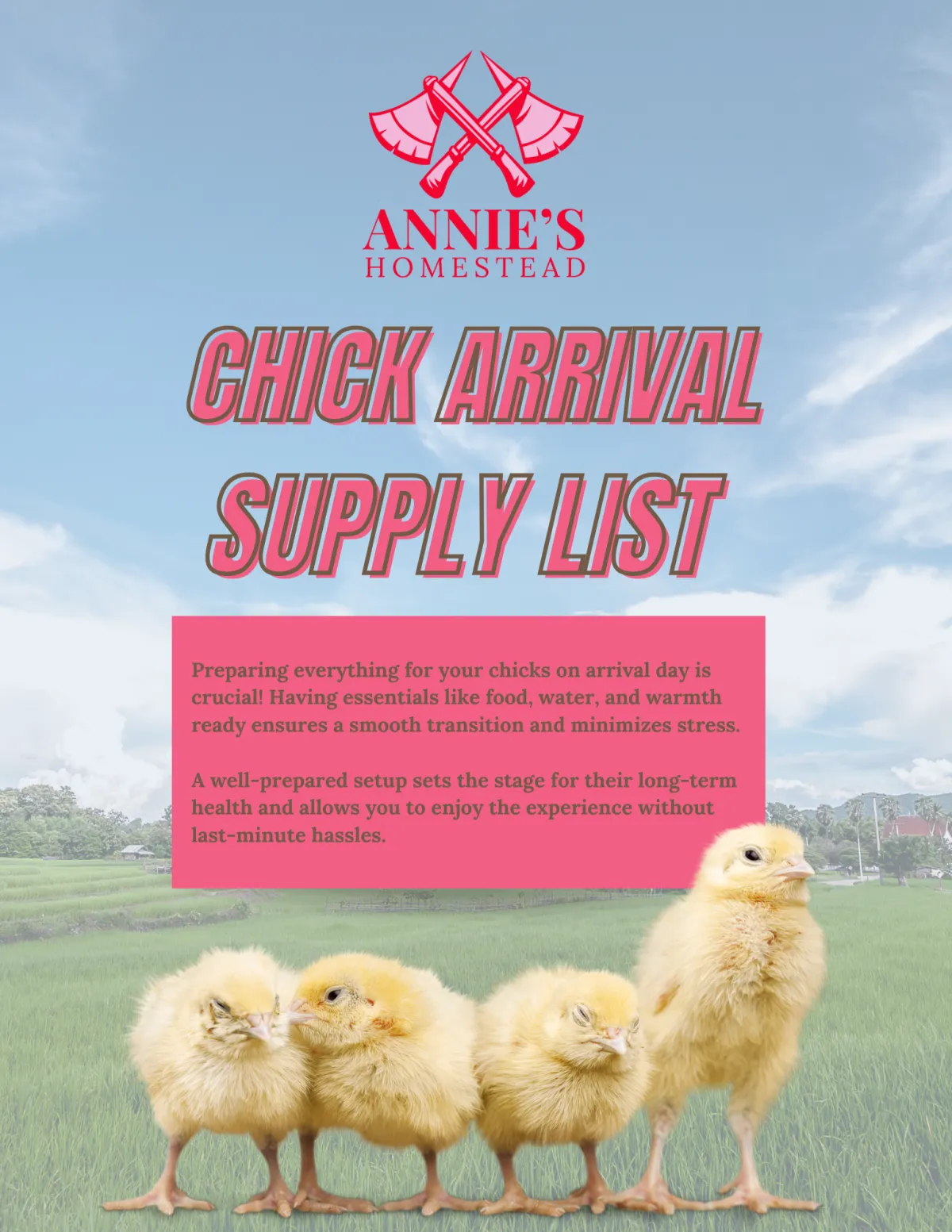
Prepare For Your New Chicks with our Favorite Essentials
Stay Updated
And join the inner circle
Be one of the firsts to know anything new and stay up to date with all the happenings on the homestead!
(I won't spam you ever - PROMISE!)
READ THE BLOG

The Real "Artificial Suns": Inside the Race to Build a Star on Earth
The Real "Artificial Suns": Inside the Race to Build a Star on Earth
Here's something most people don't know exists: governments around the world are already building "artificial suns." That's not a theory — it's the actual, official nickname for a real category of technology, and it's been in mainstream headlines for years.
Just not the kind of artificial sun most people assume when they hear the phrase.
What an "Artificial Sun" Actually Is
An artificial sun, in the real, documented sense, refers to experimental nuclear fusion reactors designed to replicate the energy-generation process that powers stars. By fusing hydrogen atoms at temperatures exceeding 100 million degrees Celsius — hotter than the core of the actual sun — these facilities aim to produce a limitless, clean energy source with zero carbon footprint and no long-lived radioactive waste.
Since no physical material can survive direct contact with plasma that hot, scientists use massive devices called tokamaks or stellarators to contain it, suspending the superheated plasma inside powerful magnetic fields so it never touches the reactor walls.
The Real Projects Behind the Name
EAST (Experimental Advanced Superconducting Tokamak) — Located in Hefei, China, EAST set a record by sustaining high-confinement plasma for 1,066 seconds. This is the reactor most often nicknamed "China's artificial sun" in international press.
ITER (International Thermonuclear Experimental Reactor) — Under construction in France, ITER is the largest magnetic confinement fusion experiment ever built, backed by a consortium including the U.S., EU, China, and Russia.
National Ignition Facility (NIF) — At Lawrence Livermore National Laboratory in California, NIF uses high-powered lasers instead of magnetic confinement, and made global headlines for achieving net energy gain from a fusion reaction.
The Patents Behind the Technology
"Artificial sun" patents generally fall into two real, distinct categories:
Solar simulators — high-intensity indoor lighting systems built to replicate the sun's spectrum, including UV and infrared, for testing solar panels, spacecraft materials, and human-centric therapeutic lighting. These include historic NASA-era patents and newer therapeutic lighting inventions like US Patent 11,129,250.
Nuclear fusion reactors — the tokamaks themselves, with patents covering vacuum chambers, superconducting magnets, and plasma control systems. Countries leading the fusion race, particularly China, have filed hundreds of patents in this category alone.
Why This Matters Alongside Everything Else
I'm not folding this into the weather modification story, and I want to be direct about why: those are two completely different things wearing a similar name. Fusion reactors are Earth-bound energy machines sitting inside research facilities — they have nothing to do with what's happening in the sky above your house. Conflating them would actually weaken both stories by making it look like real fusion news is "proof" of something it doesn't touch.
What this does prove is simpler, and honestly more interesting: humanity is actively racing to build literal stars on Earth, using real, patented, government-funded technology, and most people have no idea it's happening. You don't need a conspiracy theory for that to be remarkable. It just is.
What This Means for Homesteaders
A tokamak isn't something you'll ever run off your own land — this is mega-scale, international, multi-billion-dollar science. But the underlying instinct behind it, energy independence, isn't so different from what we're doing on a much smaller scale out here.
Whether it's a nation trying to stop depending on fossil fuels, or a homestead trying to stop depending on the grid, the question underneath is the same one: who controls the power, and what happens if that control fails? That's worth sitting with, on any scale.
It's time to take the first step towards your homesteading journey.
Don't let uncertainty hold you back any longer.
Our chicken course offers a comprehensive roadmap to self-sufficiency, guiding you step-by-step through the process of creating your own thriving flock, from hatch to harvest.
Enroll in our course today and take the first step towards a brighter, more empowered future!

Annie's Homestead is not affiliated by Facebook™ in any way. Facebook™ is a registered trademark of Facebook™ Inc
Branding and Website by RoyalT Studio